
How a biomedical engineer turned a scientific idea into a promising new approach to cancer treatment: delivering chemotherapy directly to the tumour.
What if one of the biggest challenges in cancer treatment was not simply finding a more powerful drug, but finding a better way to deliver it?
This question lies at the heart of the work of Laura Indolfi, an Italian biomedical engineer and entrepreneur who is developing a new approach to treating pancreatic cancer.
Musumeci Online – The Podcast. It is perfect for driving, commuting, or waiting in line!
Through her company, PanTher Therapeutics, Indolfi is working on a technology designed to deliver chemotherapy directly to a tumour, rather than relying exclusively on drugs circulating throughout the entire body.
The idea sounds simple. Its implications, however, could be significant.
It brings together biomedical engineering, advanced biomaterials, controlled drug delivery and cancer research. And it illustrates an important shift in modern medicine: sometimes, improving a treatment means reinventing not the medicine itself, but the technology that brings it to the disease.
Why Is Pancreatic Cancer So Difficult to Treat?
Pancreatic cancer remains one of the most challenging cancers in modern oncology.
One reason is that it can develop without producing obvious symptoms during its early stages. Consequently, many patients are diagnosed only after the disease has progressed.
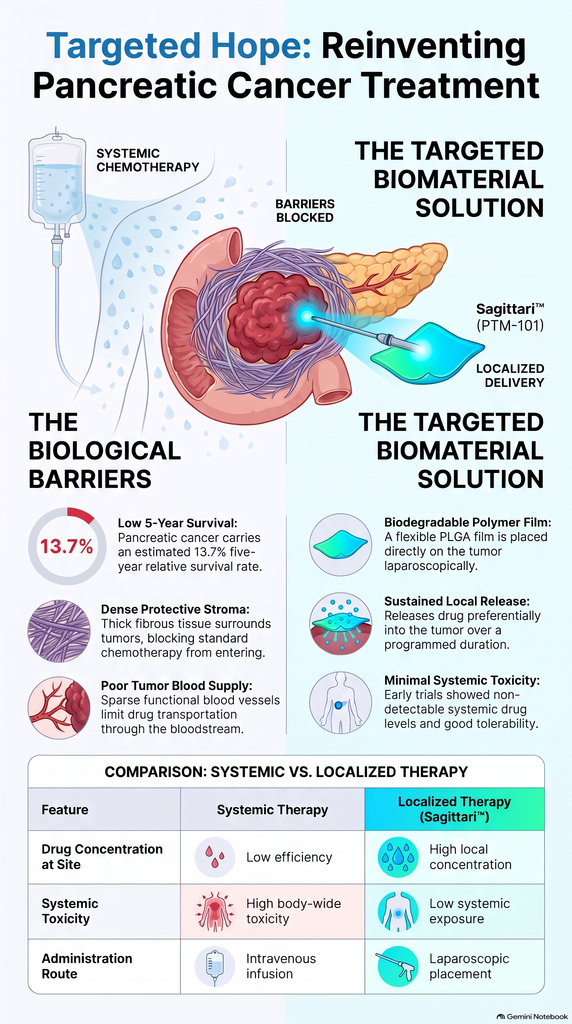
According to the US National Cancer Institute’s latest SEER statistics, the five-year relative survival rate for pancreatic cancer is approximately 13.7%, based on data from 2016–2022.
To put this into perspective, imagine a group of 100 people diagnosed with pancreatic cancer. Around 14 would be expected to be alive five years later, relative to the survival of the general population.
This is a population statistic, not an individual prediction. Outcomes vary considerably depending on the stage of the disease, tumour biology and treatment response.
But the challenge goes beyond diagnosis.
One of the most common forms of pancreatic cancer is pancreatic ductal adenocarcinoma (PDAC). This type of tumour has a particularly complex biological environment that makes treatment difficult.
Two characteristics are especially important.
1. A tumour surrounded by a protective wall
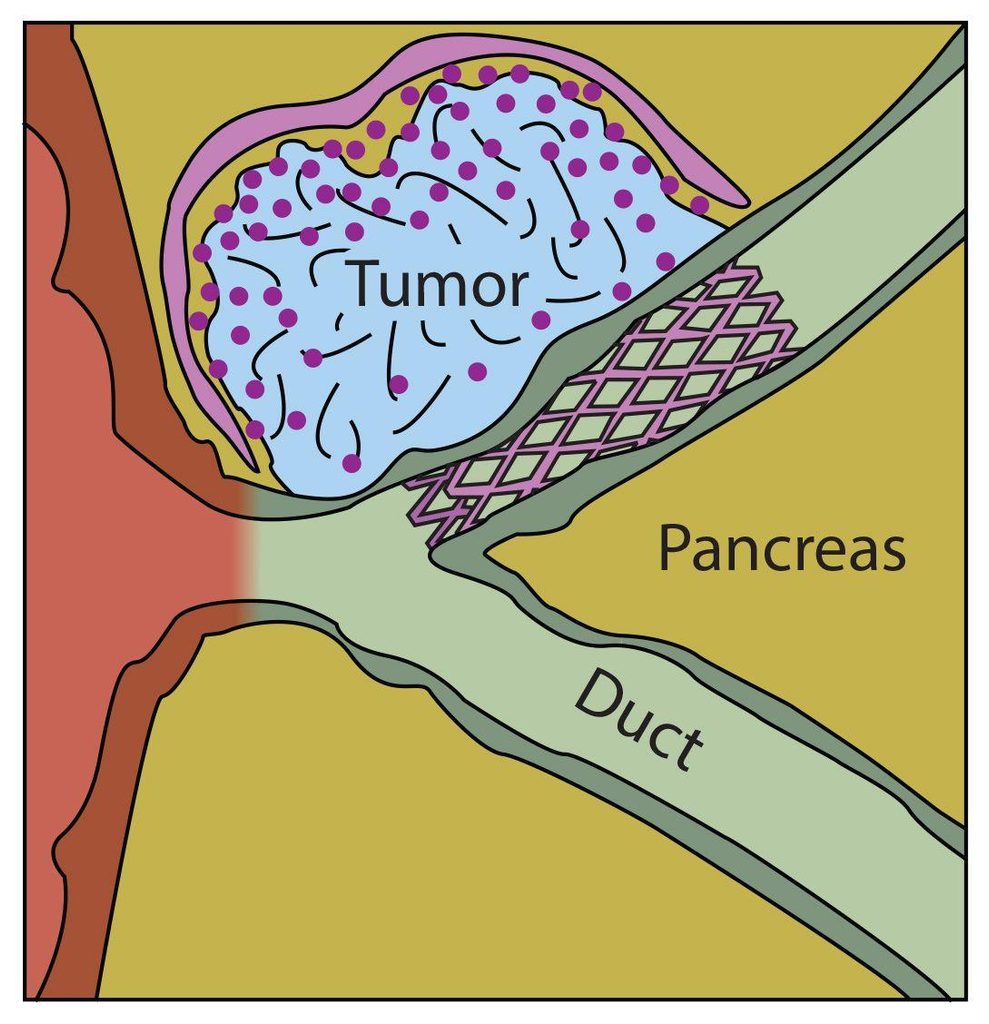
Many pancreatic tumours develop a dense network of fibrous tissue around them, known as desmoplastic stroma.
Think of a house surrounded by a thick, reinforced wall. Even if emergency services can reach the neighbourhood, getting through the wall to reach the people inside becomes much harder.
Something similar happens with pancreatic tumours.
The surrounding tissue, together with other biological mechanisms, can restrict the movement of chemotherapy drugs into the tumour. As a result, a drug circulating in the bloodstream may not reach every part of the cancer in sufficient concentrations.
This is one reason why pancreatic cancer can be particularly resistant to conventional treatments.
2. A tumour with limited blood supply
Another important characteristic is the tumour’s poor vascularisation.
Blood vessels act as the body’s delivery network. They transport oxygen, nutrients and medicines to different tissues.
However, pancreatic tumours often have relatively few functional blood vessels and an abnormal vascular environment.
Imagine trying to deliver thousands of packages to a building that has very few access roads. Even if the packages are excellent, many may never reach their destination.
This creates a difficult situation: chemotherapy needs to reach the cancer cells, but the tumour’s own structure makes that delivery less efficient.
And this is precisely where biomedical engineering enters the picture.
What If Chemotherapy Could Be Delivered Directly to the Tumour?
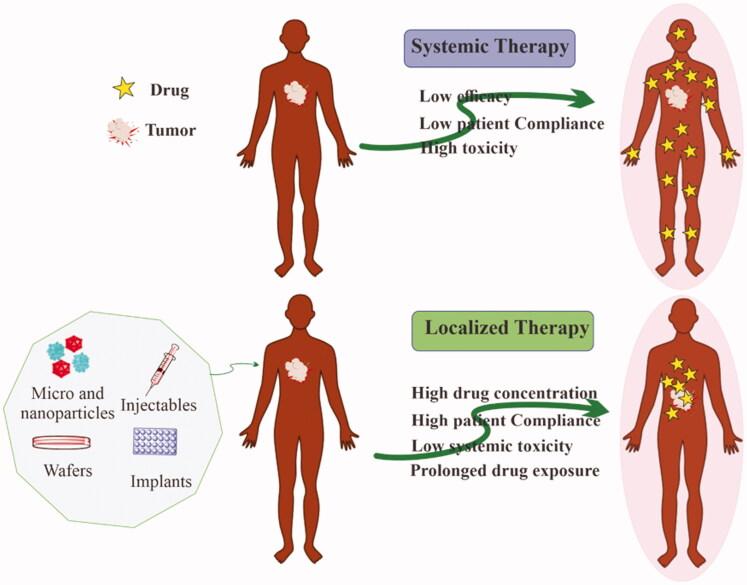
Traditional chemotherapy generally works by administering anticancer drugs into the bloodstream.
Once injected or infused, the medicine circulates throughout the body. It can reach cancer cells, but it can also affect healthy cells, contributing to familiar side effects such as fatigue, nausea, hair loss and reduced blood cell counts.
This systemic approach remains essential in cancer treatment. It is also one of the reasons why administering sufficiently high doses can be difficult: increasing the amount of medication may increase toxicity in healthy tissues.
Laura Indolfi and her collaborators approached the problem from a different direction.
Instead of asking only how to develop a more effective drug, they asked another question:
Could we bring the drug directly to the tumour and release it where it is needed?
Think about the difference between two delivery systems.
The first is like broadcasting a message to an entire city, hoping it reaches one particular building.
The second is like sending a dedicated courier directly to that building.
PanTher Therapeutics is developing a technology based on this second principle: localised drug delivery.
The objective is to achieve a higher concentration of chemotherapy at the tumour site while limiting unnecessary exposure of the rest of the body.
The Technology Behind PanTher: A Smart Material That Delivers Medicine
The scientific foundation of this approach lies in biomaterials.
Biomaterials are materials engineered to interact with biological systems. They are already used in many medical applications, including surgical implants, tissue engineering, drug delivery systems and medical devices.
In this case, the material is not simply a passive implant. It is designed to act as a controlled-release platform for anticancer medication.
From a flexible polymer film to controlled drug delivery
Early research led by Indolfi and colleagues at MIT and Massachusetts General Hospital explored a thin, flexible film made from a biodegradable polymer called PLGA (poly(lactic-co-glycolic acid)).
PLGA is particularly interesting because it can gradually break down in the body into substances that can be metabolised and eliminated.
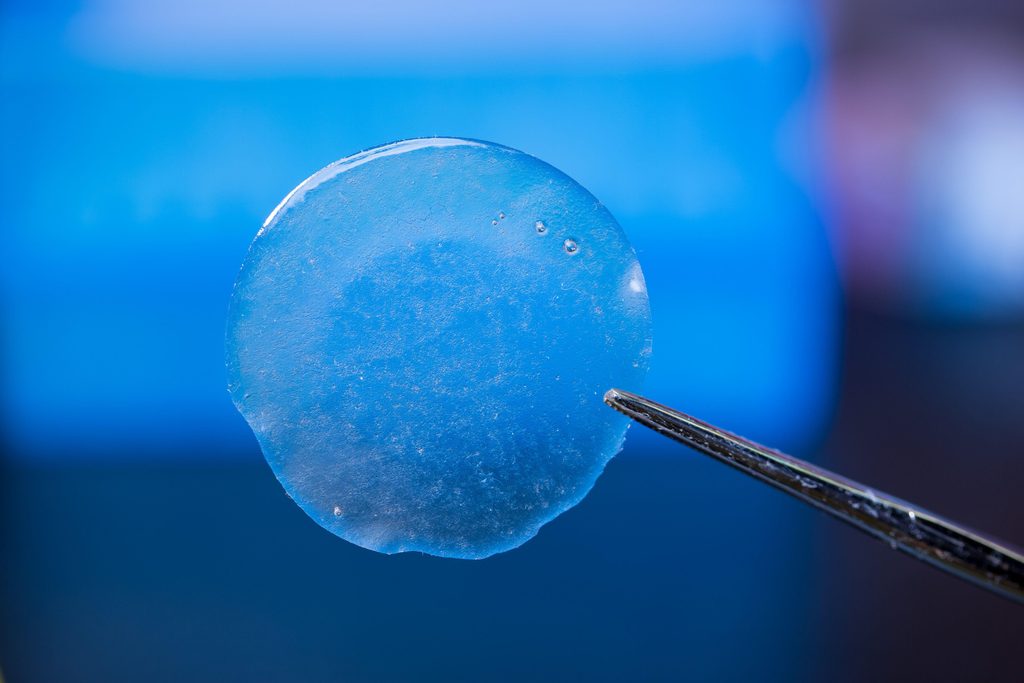
The original research demonstrated how a flexible film could be loaded with chemotherapy drugs, introduced in a compact form and positioned close to a pancreatic tumour.
Once in place, the material could conform to the tumour’s surface and release the medication over a programmed period.
An important design feature was that the drug could be released preferentially towards the tumour-facing side of the film, helping to reduce exposure of neighbouring healthy tissues.
Imagine a small, programmable medicine reservoir placed next to the target. Instead of releasing its entire contents immediately, it gradually delivers the medication over time.
That is the basic principle behind controlled local drug delivery.
What makes the Sagittari™ platform different?
PanTher has developed this research into its proprietary drug-delivery platform, called Sagittari™.
The platform uses a biodegradable polymer film designed to provide continuous, controlled drug release directly at the tumour site.
Its potential advantages include:
- Localised delivery: placing the therapeutic agent close to the cancer rather than relying exclusively on circulation through the bloodstream.
- Controlled release: delivering the medication over time instead of releasing the entire dose at once.
- Higher local drug concentrations: potentially increasing the amount of medication available within the tumour.
- Reduced systemic exposure: aiming to limit the amount of drug reaching healthy tissues.
These characteristics could be particularly relevant for pancreatic cancer, where the tumour’s poor vascularisation can make conventional drug delivery less effective.
It is important to understand that the platform does not magically eliminate the biological barriers surrounding the tumour. Instead, it offers an alternative route for delivering medication that may help bypass some of the limitations associated with conventional systemic administration.
PTM-101: Bringing the Technology Into Clinical Research
A promising laboratory concept is only the beginning.
To establish whether a technology can genuinely benefit patients, researchers must demonstrate that it can be used safely and effectively in humans.
PanTher’s lead clinical programme is PTM-101, developed for pancreatic ductal adenocarcinoma.
The treatment combines the company’s localised drug-delivery technology with paclitaxel, an established chemotherapy drug used in cancer treatment.
Rather than replacing conventional oncology treatments, PTM-101 is being investigated in combination with standard neoadjuvant chemotherapy.
Neoadjuvant treatment means administering therapy before a planned surgical intervention. In pancreatic cancer, this approach can help treat the disease before surgery and assess whether the tumour becomes more suitable for removal.
How is PTM-101 administered?
The clinical approach involves placing the drug-delivery device close to the pancreatic tumour through a laparoscopic procedure.
Laparoscopy is a minimally invasive surgical technique in which surgeons use small incisions and a camera to access the abdominal cavity.
This allows the medical team to position the device without relying on a large open surgical incision.
Once implanted, the system is intended to release paclitaxel locally over time.
The treatment is therefore not simply another chemotherapy infusion. It combines a pharmaceutical agent with an engineered delivery device and a surgical procedure.
This is a good example of how modern medical innovation increasingly takes place at the intersection of different disciplines.
What have clinical studies shown so far?
The development pathway has progressed beyond laboratory research.
In the initial Phase I clinical study, PanTher reported encouraging findings, including good tolerability and no serious adverse events among the treated patients. The company also reported that systemic paclitaxel concentrations remained below its detection threshold at the tested time points.
These observations are interesting because they suggest that localised administration may help limit systemic exposure.
However, a small early-stage study cannot establish whether a treatment improves survival or offers a meaningful long-term clinical advantage.
The next step is therefore to evaluate the technology in a larger group of patients.
As of November 2026, PTM-101 is being evaluated in a Phase Ib dose-escalation and expansion study, registered as NCT06673017.
The trial is investigating the treatment in patients with borderline resectable and locally advanced pancreatic ductal adenocarcinoma, in combination with neoadjuvant chemotherapy.
The study is assessing safety, tolerability and preliminary signs of antitumour activity. The dose-escalation component helps researchers identify an appropriate dose before expanding the number of patients evaluated.
Early findings reported by the Massachusetts Life Sciences Center in April 2026 described good tolerability and encouraging signs of tumour response at the initial dose levels.
These are positive signals, but they must be interpreted carefully.
A tumour response observed in an early-stage clinical trial is not the same as proof that a treatment extends survival, prevents recurrence or cures cancer.
That evidence requires further studies, larger patient populations and longer follow-up.
Nevertheless, moving from a laboratory concept to a clinical trial represents an important milestone.
Laura Indolfi: From Biomedical Research to Entrepreneurship
Behind this technology is a story that is just as interesting as the science itself.
Laura Indolfi was born in Naples, Italy, and studied materials science engineering at the University of Naples Federico II, where she also completed a PhD in biomedical engineering.

Her academic background gave her a strong understanding of how materials can interact with living tissues.
After completing her doctorate, she moved to Boston to pursue research opportunities in the United States.
She subsequently worked within the Harvard-MIT research environment, collaborating on projects involving local drug delivery, tissue engineering and regenerative medicine.
But Indolfi was interested in something beyond scientific discovery.
She wanted to understand how an idea developed in a laboratory could become a real medical solution.
While at MIT, she attended business courses to learn more about entrepreneurship, business models and the process of bringing scientific innovation to market.
This experience would become particularly important.
The decision to create a company
In an interview with Tech Europe Foundation, Indolfi explained that the decision to establish her own company emerged partly from the difficulty of finding a professional role that matched her ambitions.
After her postdoctoral research, she explored opportunities in larger companies. However, many of the positions available were highly technical and very similar to the work she had already been doing.
She realised that she wanted a different challenge.
A promising research project provided the opportunity.
Using the scientific data generated by her team and the business knowledge she had acquired, she developed a business plan and founded PanTher Therapeutics.
It was a transition from being a researcher working on a scientific problem to becoming an entrepreneur responsible for turning that research into a product.
The distinction is important.
A scientific discovery does not automatically become a medical treatment. It must be developed, tested, manufactured, financed, regulated and eventually integrated into clinical practice.
Each of these stages requires different skills and different people.
Why science alone is not enough
One of the most interesting aspects of Indolfi’s story is her description of the challenges involved in building a biomedical company.
Scientific expertise is essential, but it represents only one part of the journey.
A biomedical entrepreneur must learn to communicate with surgeons, oncologists, regulatory authorities, investors, insurers and industrial partners.
Each group looks at the same technology from a different perspective.
A surgeon wants to understand whether implantation is practical and safe.
An oncologist wants to know whether the treatment could improve patient outcomes.
A regulatory authority needs robust evidence that the device and drug combination meets the required safety and quality standards.
An investor needs to understand the commercial opportunity, the development risks and the resources required to reach the market.
In other words, translating research into healthcare innovation requires much more than a good scientific idea.
It requires building a bridge between science, medicine, technology and business.
Why Biomedical Innovation Needs More Than Great Scientists
The story of PanTher also illustrates the importance of the innovation ecosystem surrounding biomedical research.
Indolfi became part of the Massachusetts Next Generation (MassNextGen) Initiative, supported by the Massachusetts Life Sciences Center.
The programme provides entrepreneurs with mentorship, strategic guidance and access to experienced professionals in the life sciences industry.
This type of support can be particularly valuable for early-stage medical technology companies.
Unlike many digital products, a new medical device or drug-delivery platform cannot simply be launched and improved through successive software updates.
It must undergo rigorous scientific validation, clinical evaluation and regulatory review.
The journey can take years and requires substantial investment.
Programmes that connect researchers with business leaders, clinicians and investors can help bridge the gap between laboratory research and clinical development.
Indolfi’s experience demonstrates why this multidisciplinary environment matters.
It is not enough to invent something that works under controlled laboratory conditions. The technology must also be practical, reproducible, safe and capable of fitting into the everyday reality of hospitals.
What Could This Mean for the Future of Cancer Treatment?
PanTher’s approach raises a broader question: could localised drug delivery become an important part of cancer treatment in the future?
The idea is not limited to pancreatic cancer.
Many solid tumours present challenges related to drug penetration, local tissue structure and the ability to maintain effective concentrations of medication at the disease site.
A platform capable of delivering therapeutic agents directly to a tumour could potentially be adapted to other indications.
PanTher itself describes Sagittari™ as a platform with potential applications beyond its initial pancreatic cancer programme.
However, each new application would require its own scientific and clinical validation.
There are also important questions that researchers still need to answer.
- Can local delivery consistently achieve meaningful therapeutic concentrations?
- Can it improve clinical outcomes when combined with standard treatments?
- How long can the implant remain effective?
- What happens as the biodegradable material breaks down?
- Can the procedure be performed safely and efficiently across different clinical settings?
And, perhaps most importantly, can the technology demonstrate a measurable benefit for patients compared with existing treatment options?
These questions will determine whether the technology becomes a meaningful addition to cancer care.
A New Way of Thinking About Medicine
Laura Indolfi’s journey offers an interesting lesson about the future of healthcare.
For decades, much of pharmaceutical innovation has focused on discovering new molecules and developing drugs with increasingly sophisticated mechanisms of action.
But medical progress does not depend exclusively on discovering new medicines.
It can also come from improving how existing medicines are delivered, where they are released and how long they remain active.
This is particularly relevant in cancer treatment, where the challenge is not simply to destroy malignant cells, but to do so while protecting healthy tissues as much as possible.
The combination of biomaterials, drug-delivery engineering and clinical medicine opens new possibilities for addressing this challenge.
And perhaps the most inspiring aspect of Indolfi’s story is that it began with a question that any curious engineer could understand:
Why should a medicine travel through the entire body when the problem is concentrated in one specific place?
It is still too early to know how far PanTher’s technology will go. Its clinical potential must be demonstrated through further research.
But the journey from an academic laboratory in Boston to clinical trials involving patients with pancreatic cancer already illustrates something important.
Sometimes, the next major advance in medicine does not come from inventing a completely new drug.
It comes from finding a smarter way to bring the right treatment to the right place.
Medical and scientific note: PTM-101 remains an investigational treatment. It has not been established as an approved cure or standard treatment for pancreatic cancer. Clinical trial findings should be interpreted as preliminary until confirmed through further studies.
References and further reading
- MIT News – Implantable device targets pancreatic cancer (2016)
- Indolfi et al. – A Tunable Delivery Platform to Provide Local Chemotherapy for Pancreatic Ductal Adenocarcinoma, Biomaterials (2016)
- PanTher Therapeutics – Sagittari™ platform and clinical pipeline
- National Cancer Institute – PTM-101 clinical trial
- Massachusetts Life Sciences Center – Laura Indolfi and PanTher Therapeutics (2026)
- Tech Europe Foundation – From research to entrepreneurship: the story of Laura Indolfi
- TED – Good news in the fight against pancreatic cancer, Laura Indolfi
Musumeci Online – The Newsletter. Enjoyed this article? Subscribe to our monthly newsletter [here] to stay up to date with our latest content.
Leave a Reply