
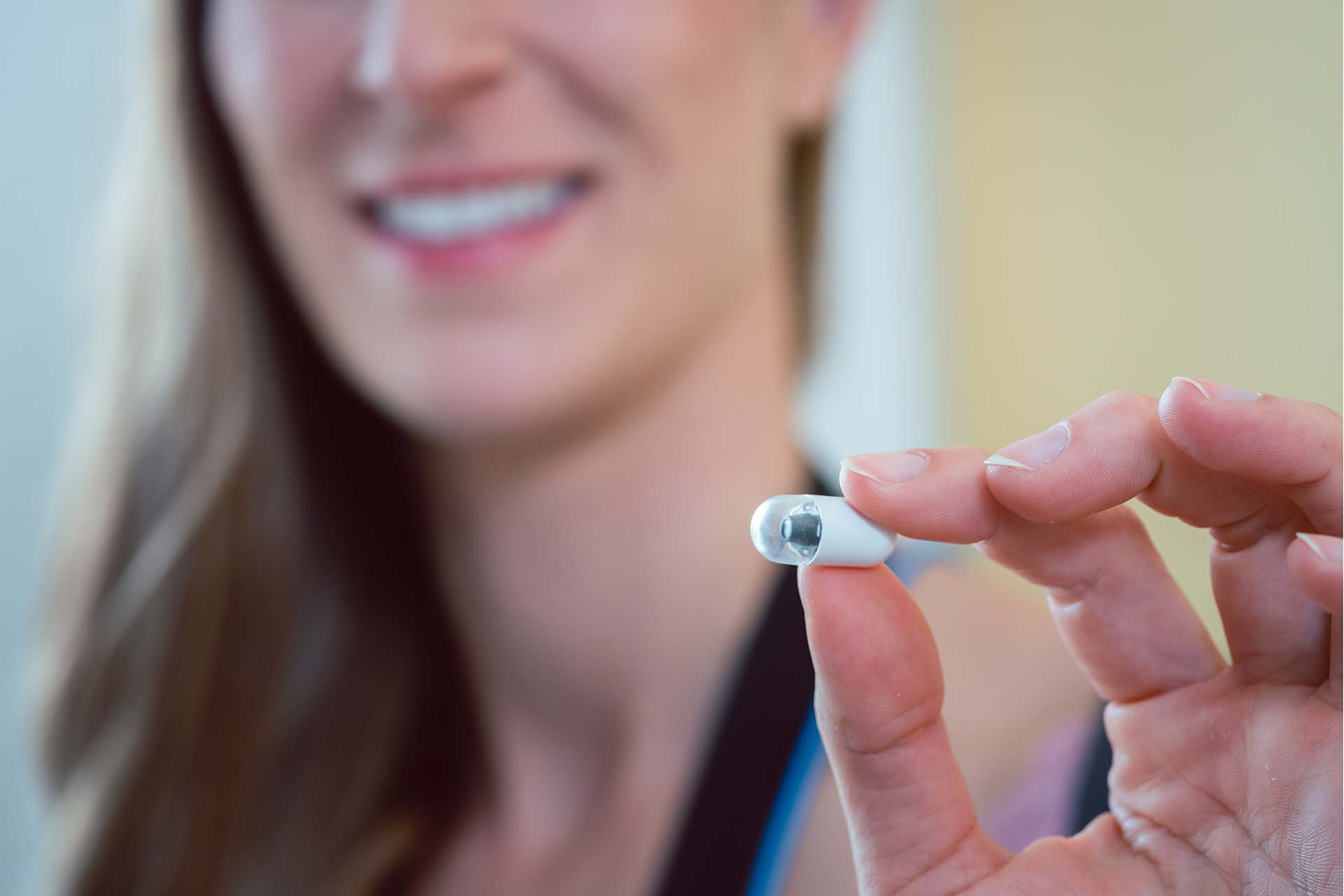
Imagine diagnosing stomach pain or hidden intestinal bleeding without tubes or anesthesia — just by swallowing a tiny, camera-equipped capsule the size of a large vitamin pill. That idea, once futuristic, has become a powerful reality in modern medicine. Video capsule endoscopy (VCE) is reshaping how doctors see inside the digestive system and opening doors to faster, more comfortable, and more accurate gastrointestinal diagnostics.
Musumeci Online – The Podcast. It is perfect for driving, commuting, or waiting in line!
What Is a Video Capsule? A Simple Inside Look
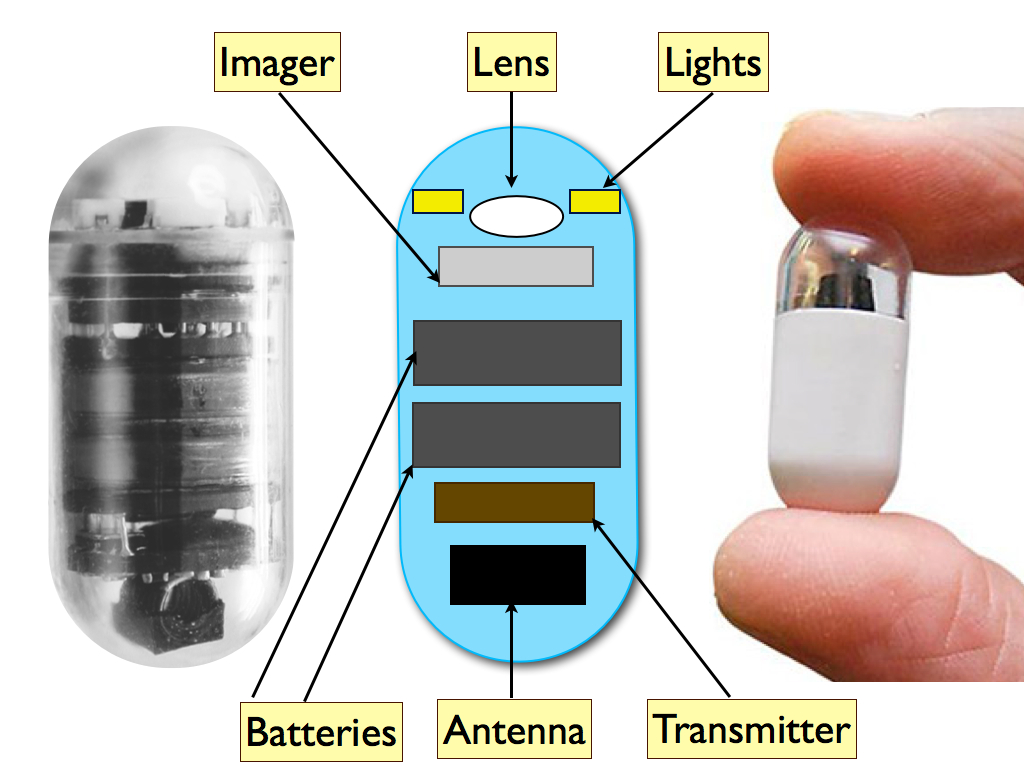
Instead of traditional endoscopes — long tubes inserted through the mouth or rectum — a video capsule is a small, ingestible camera that travels naturally through the gastrointestinal tract. Because it’s wireless, it captures thousands of images of the digestive lining as it moves along. Patients can go about normal activities while it collects this video data over several hours.
Think of it like wearing a “GoPro” for your digestive system — only this one silently transmits thousands of bright, detailed images from inside your body. Afterward, doctors download and review the footage to spot inflammation, bleeding, or other abnormalities.
Why This Matters: Comfort Meets Accuracy
Traditional endoscopy and colonoscopy are highly effective, but they can be uncomfortable and often require sedation, prep time, and a clinic visit. Capsule endoscopy changes that dynamic:
- 🌟 Minimally invasive: Patients simply swallow the capsule with water.
- 📸 Comprehensive view: The capsule can see areas of the small intestine that are hard to reach with conventional tools.
- ⏱ Efficient: Thousands of images are collected over several hours while the patient leads a normal day.
For example, this technology is particularly strong at detecting small bowel bleeding, Crohn’s disease, and small tumors — conditions that might otherwise be missed or require multiple procedures.
A New Era with AI: Faster, Smarter Diagnostics
Recent breakthroughs are turbocharging this technology with artificial intelligence (AI). Traditional video reading can take hours and relies on specialists manually reviewing every frame. Today, FDA-cleared tools like ProScan help doctors analyze capsule footage much faster and with improved accuracy, especially for signs of small bowel bleeding. These AI systems highlight suspicious areas, so clinicians can focus on what matters most — the health of the patient.
It’s as if a seasoned editor could instantly flag all the important moments in a long film, helping doctors make quicker, more precise diagnoses.
Steering the Capsule: Robotic and Magnetic Control
Until recently, capsules moved passively — propelled only by digestion and gravity. Now, research shows doctors can use magnetic systems or joystick-like controls to steer capsules in real time, especially in the stomach. This allows more thorough visualization of areas that were once difficult to examine without a tube-based endoscopy. In pilot studies, physicians achieved nearly 95% full-stomach visualization using these controlled capsules.
Even more promising is the NaviCam Stomach Capsule System, which permits controlled navigation and high-resolution imaging of the stomach’s interior — often without sedation and with patient comfort much higher than traditional methods. Early clinical studies show strong patient preference for this approach over conventional procedures.
Real Use Cases: Who Can Benefit?
Video capsule endoscopy is proving useful in many scenarios:
- 📍 Unexplained gastrointestinal bleeding: where conventional tests come up short.
- 📍 Suspected Crohn’s disease: especially in the middle sections of the small intestine.
- 📍 Pan-enteric screening: new capsule designs can assess both small bowel and colon in one pass.
- 📍 Gastroscopy without a tube: thanks to magnetically controlled capsules that can replace uncomfortable tube insertions for many patients.
In one multicenter study, most patients preferred the video capsule experience over traditional techniques, highlighting how technology can improve not just detection, but also patient comfort and adherence to screening programs.
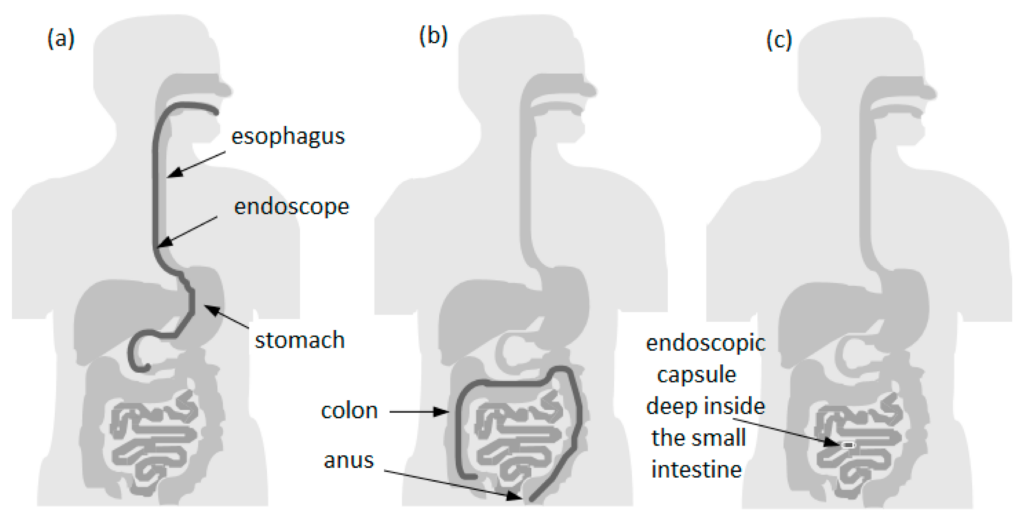
Comparison between covered areas of the diagnostic with endoscopy and endoscopic capsule: (a) upper endoscopy; (b) lower endoscopy; (c) area that cannot be reached by conventional upper endoscopy or even by colonoscopy.
What’s Next? A Future of Even Smarter Capsules
The technology continues to evolve. Scientists are exploring ways to embed improved sensors, AI-driven image processing, and even tactile feedback into capsules so they can detect abnormalities earlier and more reliably. While capsule endoscopy currently focuses on diagnosis rather than treatment, future versions may someday support precision therapies or targeted drug delivery.
Imagine a tiny device that not only sees inside your body but helps guide treatment decisions in real time — a leap toward truly personalized medicine.
Final Thought: Small Capsule, Big Potential
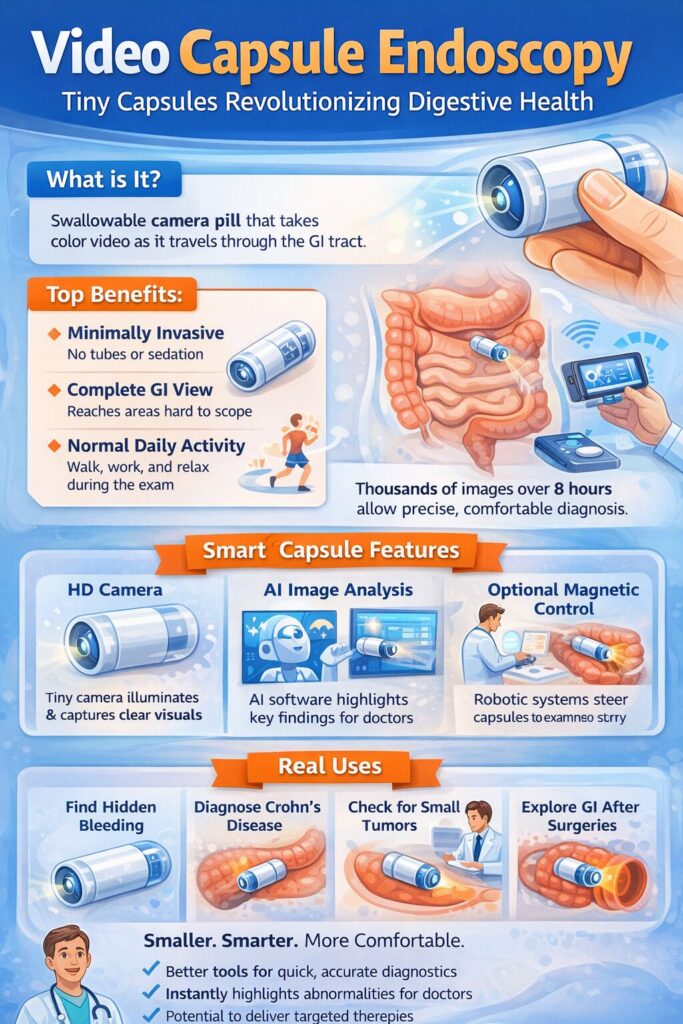
Video capsule endoscopy is more than a clever gadget. By combining miniaturized imaging, robotics, and artificial intelligence, this technology makes gastrointestinal diagnosis more comfortable, more accurate, and more efficient. Whether it’s early bleeding detection, chronic disease monitoring, or reducing discomfort for patients, capsule technology offers a compelling glimpse into the future of gastrointestinal care — one where advanced tools empower doctors and patients alike.
Leave a Reply