What used to be pure science fiction — computers talking to the human brain — is now one of the most exciting frontiers in medicine. In the last few years, scientists and engineers have achieved progress that just a decade ago would have seemed impossible: restoring part of a person’s sight through advanced implants and technology.
And importantly, this isn’t just hype — it’s happening right now in clinical studies and trials around the world.
Let’s explore what this means in a way that’s clear, hopeful, and easy to understand, even if you don’t work in healthcare or tech.
Musumeci Online – The Podcast. It is perfect for driving, commuting, or waiting in line!
From Total Darkness to Flashes of Light: A Real Breakthrough
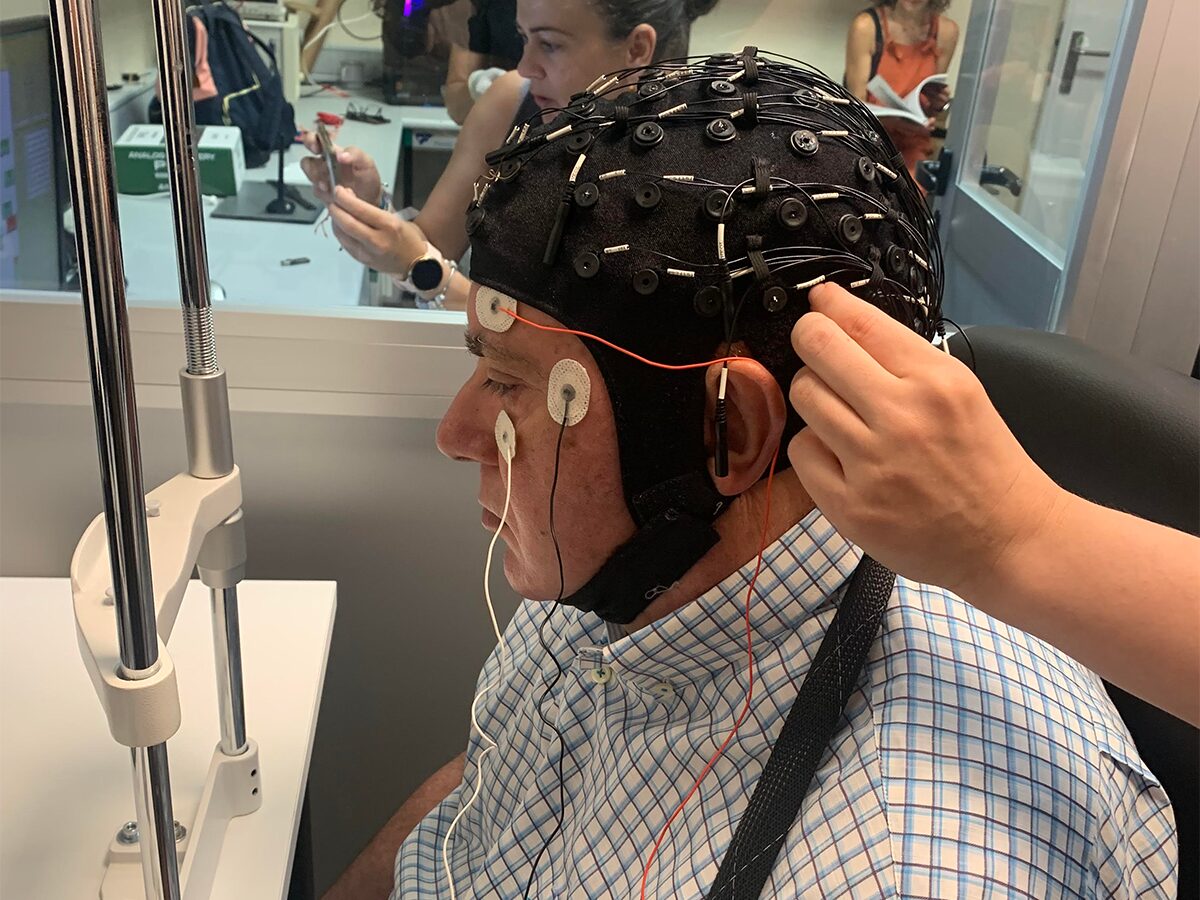
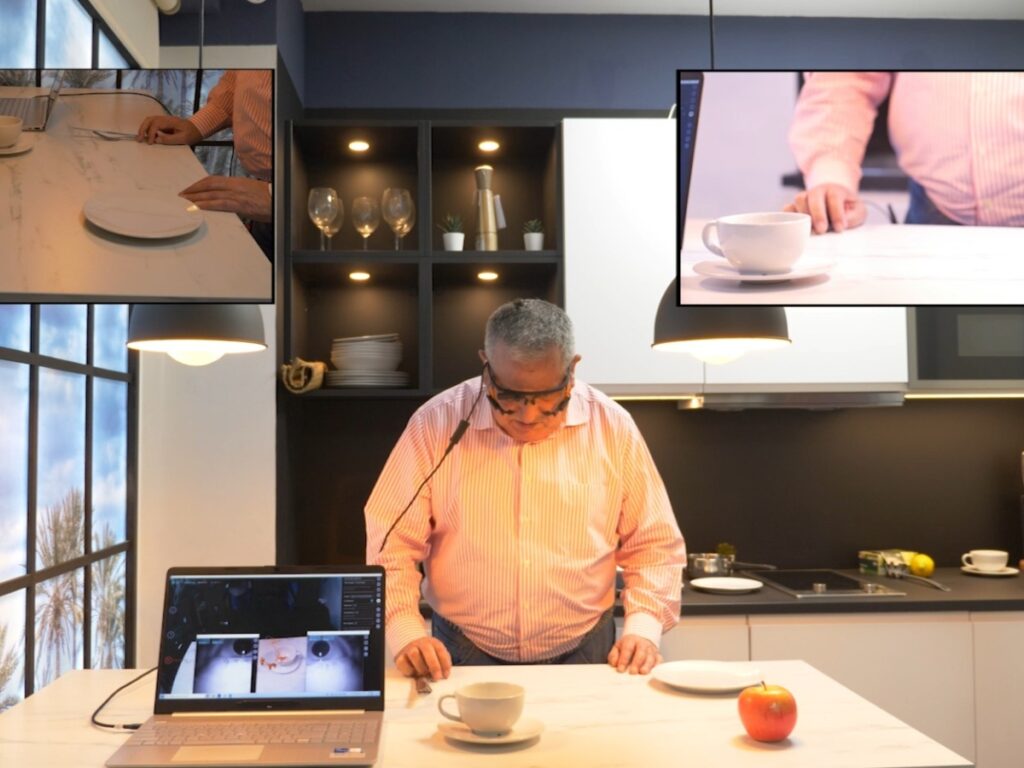
A recent clinical trial in Spain made global headlines when a man who had been totally blind for years began to see light, shapes, and motion again — not because his eyes started working, but because a tiny device was placed directly on his brain.
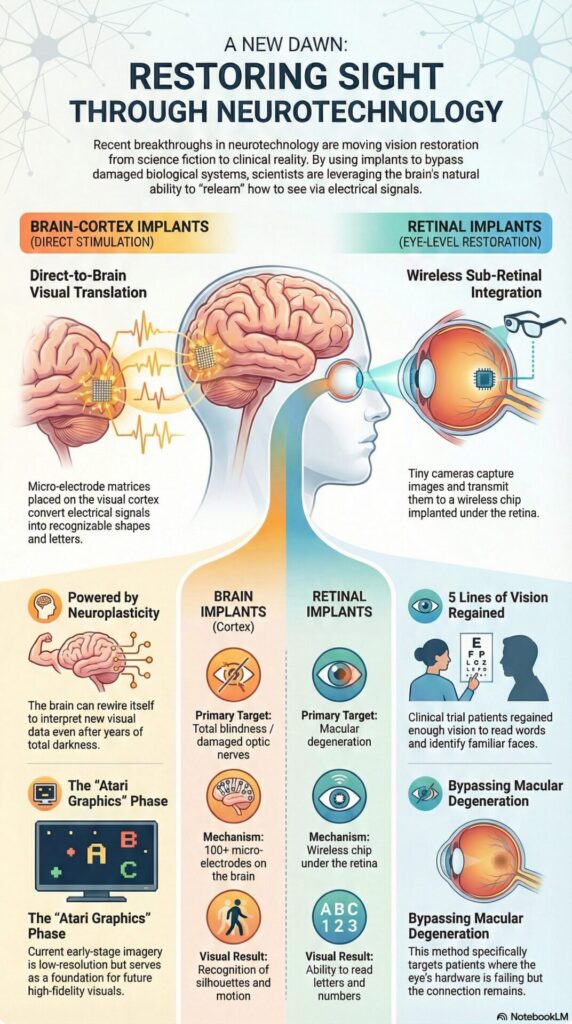
This implant consisted of a matrix of about 100 micro-electrodes that stimulated the visual cortex — the part of the brain that interprets sight. The device acted like a translator, converting electrical signals into something neurons could understand. Over time, with training and practice, the man began to recognize objects and even letters.
Remarkably, some of these improvements persisted even after the implant was removed — suggesting that the human brain retains a surprising ability to adapt and reorganize itself.
It’s as if someone, after years in total darkness, suddenly begins to see silhouettes and outlines first, and then slowly learns how to interpret them — like learning a new visual language.
Beyond the Brain: Retinal Implants That Restore Reading and Recognition
While brain implants send signals directly to the visual cortex, retinal implants work closer to the eye. One of the most promising devices is a wireless chip implanted under the retina that captures images through a tiny camera and translates them into electrical signals the retina and brain can interpret.
In a recent European clinical trial involving 38 patients with age-related macular degeneration (a leading cause of blindness), most people who received this implant could read letters, numbers, and words again — something previously thought to be permanently lost.
On average, patients regained about five lines of vision on a standard eye chart — enough for many day-to-day tasks like reading, recognizing signs, or identifying familiar faces.
One powerful way to understand this is to think of vision like a broken puzzle: the retinal implant doesn’t put every piece back perfectly, but it reconnects enough pieces that the brain can begin to see a meaningful picture again.
Why These Advances Are Bigger Than You Think
1. The Brain Doesn’t Forget — It Learns Again
Perhaps the most inspiring takeaway from recent research is that the brain can adapt even after years without visual input. In the Spanish case, the patient’s brain didn’t simply receive signals — it relearned how to interpret them. That’s a testament to neuroplasticity — the brain’s ability to rewire itself, even later in life.
Think of it as rebooting a neglected computer drive: after years of no use, a new power source — and the right software — can encourage it to come alive again.
2. Multiple Paths to Progress
The race to restore sight isn’t happening in one lab or one country — it’s happening globally, with different techniques converging toward the same goal:
- Brain implants that send signals directly into the cortex.
- Retinal prosthetics that mimic the eye’s function.
- AI algorithms that personalize visual signal processing.
- Wireless micro-LED devices that might one day activate neurons with light instead of electricity.
Together, these approaches are like layers of progress building a ladder back to vision — each rung making the next one easier to reach.
Looking Ahead: What’s Next in Visual Neurotechnology
There are even bigger developments on the horizon. For example, a project known as Blindsight, developed by a major neurotechnology company, has received FDA “Breakthrough Device” status. If successful, it aims to bypass damaged optic nerves entirely and stream visual data directly into the brain — potentially enabling blind-from-birth individuals to see for the first time.
Even though early versions are expected to produce rough, low-resolution images — what one expert compared to “Atari graphics” — the technology is designed to improve over time as electrode density and brain-machine learning increase. Imagine early computer games compared to today’s ultra-realistic graphics — that’s a good analogy for what’s possible over the next decade.
Why This Matters Beyond Medicine
These technologies are more than tools — they represent a profound shift in how humans interact with their bodies and senses. They blur the line between biology and engineering in a way that’s both hopeful and deeply human.
For people living with vision loss, these innovations are not just clinical achievements — they can mean greater independence, renewed confidence, and the return of parts of life that many had given up on.
And for all of us, they are a reminder that science — when paired with imagination and care — can make possible what once seemed impossible.
Leave a Reply