What if improving your physical performance didn’t always require physical effort?
A growing field of neurotechnology suggests exactly that. And one of the most fascinating examples comes from i-BrainTech, a company exploring how artificial intelligence and brain science can turn mental practice into measurable results in the real world.
At first glance, the idea feels almost counterintuitive. How can simply thinking about a movement help you perform it better?
The answer lies deep inside the way our brain works.
Musumeci Online – The Podcast. It is perfect for driving, commuting, or waiting in line!
The hidden power of mental rehearsal
Long before AI entered the scene, athletes and psychologists already knew something surprising:
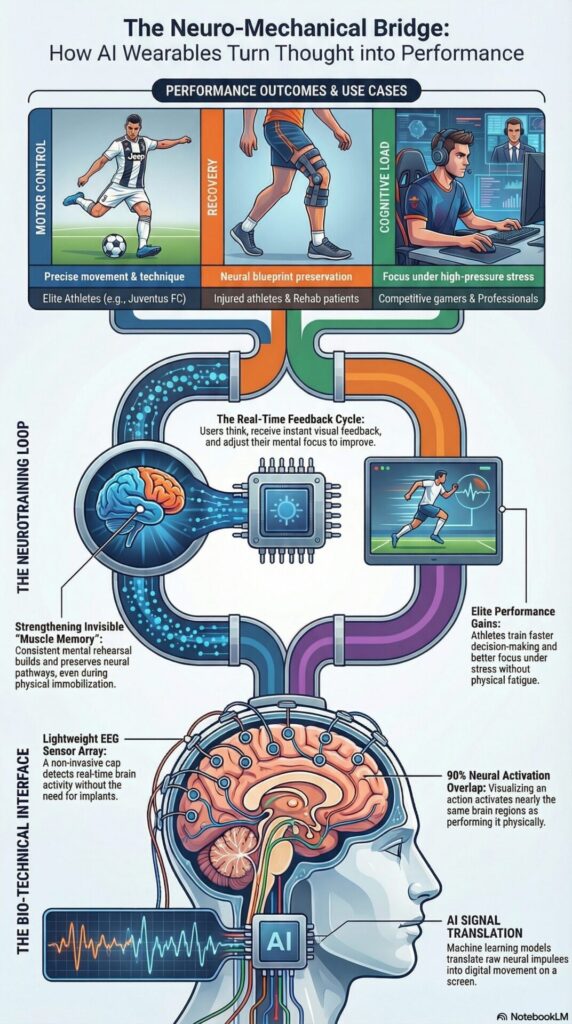
Visualizing an action activates the brain in a way that is remarkably similar to actually performing it.
Think of it like rehearsing a speech in your mind. Even without speaking out loud, your brain is quietly running the same script.
Now apply that concept to movement:
- A football player imagining a pass
- A patient visualizing walking again
- A pianist mentally practicing a complex piece
In each case, the brain is strengthening neural pathways—almost like building invisible “muscle memory.”
i-BrainTech takes this natural process and enhances it using technology.
How the AI brain wearable works
Instead of focusing on muscles, this system focuses on the brain itself.
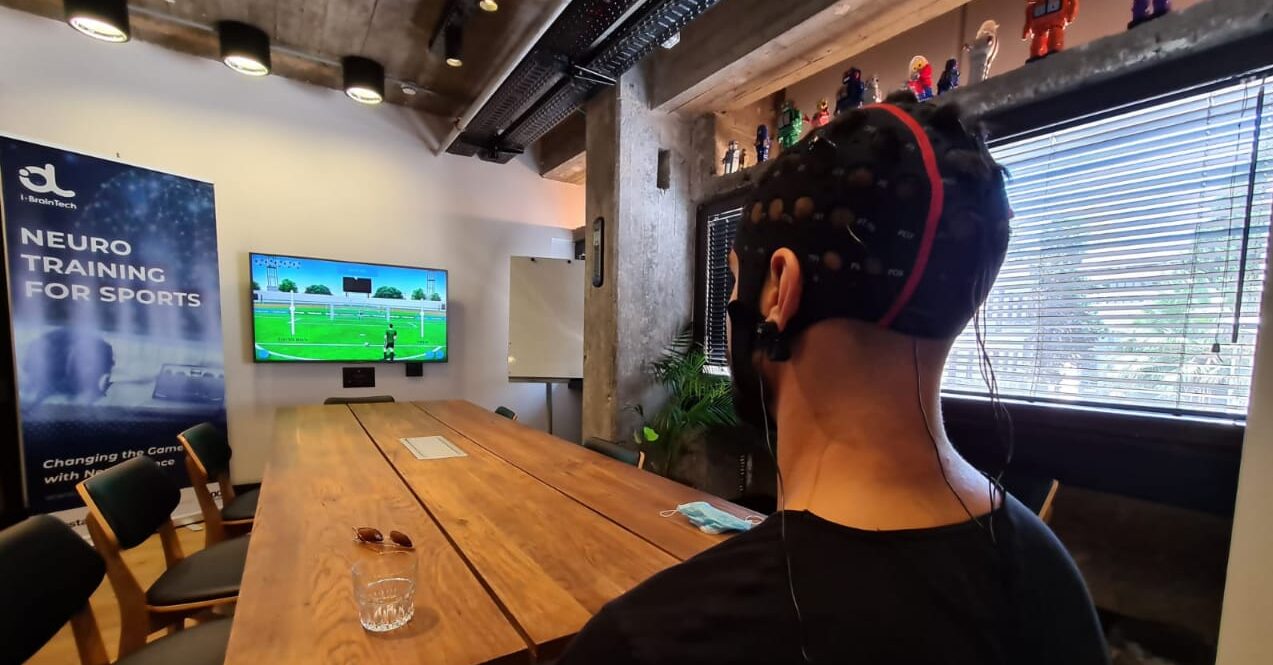
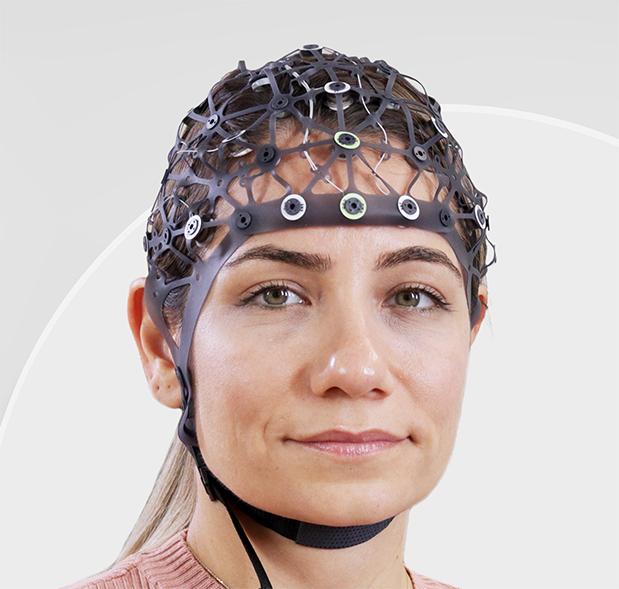
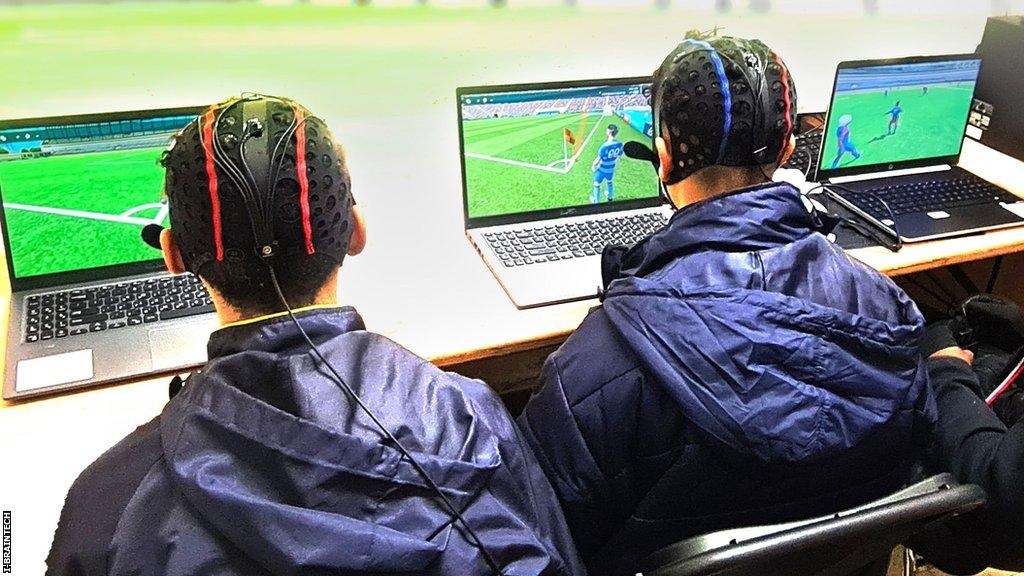
The platform uses a lightweight sensor-equipped cap that detects brain activity in real time.
Here’s a simple way to understand it:
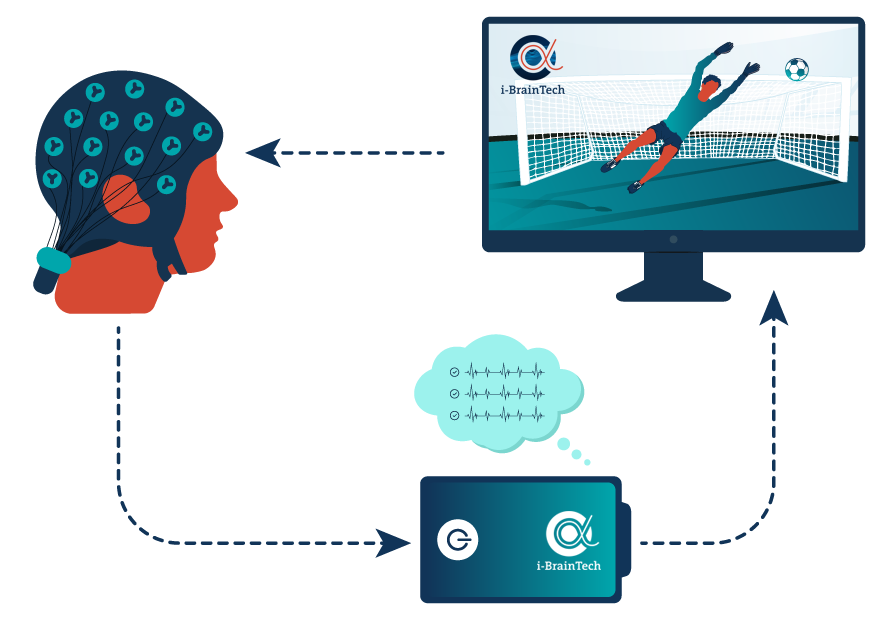
- You wear the cap
- You visualize a movement (for example, kicking a ball)
- The system reads your brain signals
- An AI model translates those signals into action on a screen
In many cases, users control a digital avatar using nothing but their thoughts.
It feels like a video game—but it is actually a form of neurotraining.
Turning thoughts into measurable performance
The real innovation is not just reading brain signals. It is what happens next.
The system provides instant feedback, showing users how effectively their brain is activating the right patterns.
This creates a loop:
Think → Receive feedback → Adjust → Improve
Over time, the brain becomes more efficient.
If this sounds abstract, consider a simple analogy:
Learning this way is like having a mirror for your thoughts. Just as a mirror helps you correct your posture, this technology helps you refine how your brain controls movement.
From elite athletes to everyday health
The first testing ground for this technology has been elite sports.
Why? Because at the highest level, the difference between winning and losing often comes down to milliseconds—and decision-making under pressure.
i-BrainTech has collaborated with top football clubs, including Juventus FC, to explore how cognitive training can enhance performance.
Players can train:
- Faster decision-making
- Better focus under stress
- More precise motor control
And here’s the key insight:
You don’t always need to be on the field to improve your game
For injured athletes, this is particularly powerful. Instead of losing skills during recovery, they can maintain—and sometimes even improve—them through mental training.
A new frontier in rehabilitation
Beyond sports, the implications for healthcare are significant.
Patients recovering from injuries such as strokes or surgeries often face a frustrating reality:
They know what they want to do, but their body cannot respond.
This is where mental training becomes a bridge.
By activating the brain’s motor pathways without physical strain, the technology helps:
- Preserve neural connections
- Support recovery during immobilization
- Accelerate rehabilitation progress
To make this more tangible:
If traditional rehabilitation is like rebuilding strength with physical exercise, this approach is like keeping the blueprint alive while the building is under repair.
Numbers that tell a story
While brain technology can feel abstract, its impact becomes clearer with simple comparisons.
- Mental training can activate up to 90% of the same brain regions as physical movement
- Athletes using cognitive training often show measurable improvements in performance tasks
- The potential market includes hundreds of millions of athletes and over a billion health-conscious individuals worldwide
Think of it this way:
If even a small improvement—say 5%—can decide the outcome of a professional match, imagine what consistent cognitive training could achieve over time.
Ethical innovation: enhancing, not replacing
One of the most important aspects of this technology is what it doesn’t do.
Unlike some futuristic concepts involving implants, i-BrainTech focuses on non-invasive solutions.
There is no writing into the brain. No altering identity.
Instead, the goal is simple:
Help the brain perform at its natural best
This approach reflects a broader trend in AI and healthcare—technology as an amplifier of human potential, not a replacement.
The bigger picture: training the mind like a muscle
For decades, society has invested heavily in physical fitness.
Gyms, wearables, training plans—all designed to optimize the body.
Now, a similar shift is happening for the brain.
The idea is straightforward:
- Physical fitness improves strength and endurance
- Mental fitness improves focus, decision-making, and control
And just like physical training, consistency matters.
i-BrainTech’s vision is to make brain training as common as going for a run.
What comes next?
The journey is just beginning.
Future developments may include:
- Integration with virtual and augmented reality
- Personalized AI models tailored to each individual brain
- Applications in education, gaming, and workplace performance
As these systems evolve, they could become part of everyday life—quietly supporting how we learn, move, and make decisions.
A subtle but powerful transformation
Not every technological revolution is loud.
Some happen quietly, reshaping how we think—literally.
The idea that thinking can become training challenges traditional assumptions about effort, performance, and recovery.
It suggests a future where:
- Practice is not limited by physical conditions
- Recovery does not mean inactivity
- Performance starts in the mind
And perhaps most importantly:
It reminds us that one of the most powerful tools we have has been with us all along—the human brain.
Now, with the help of AI, we are finally learning how to train it.
Leave a Reply