
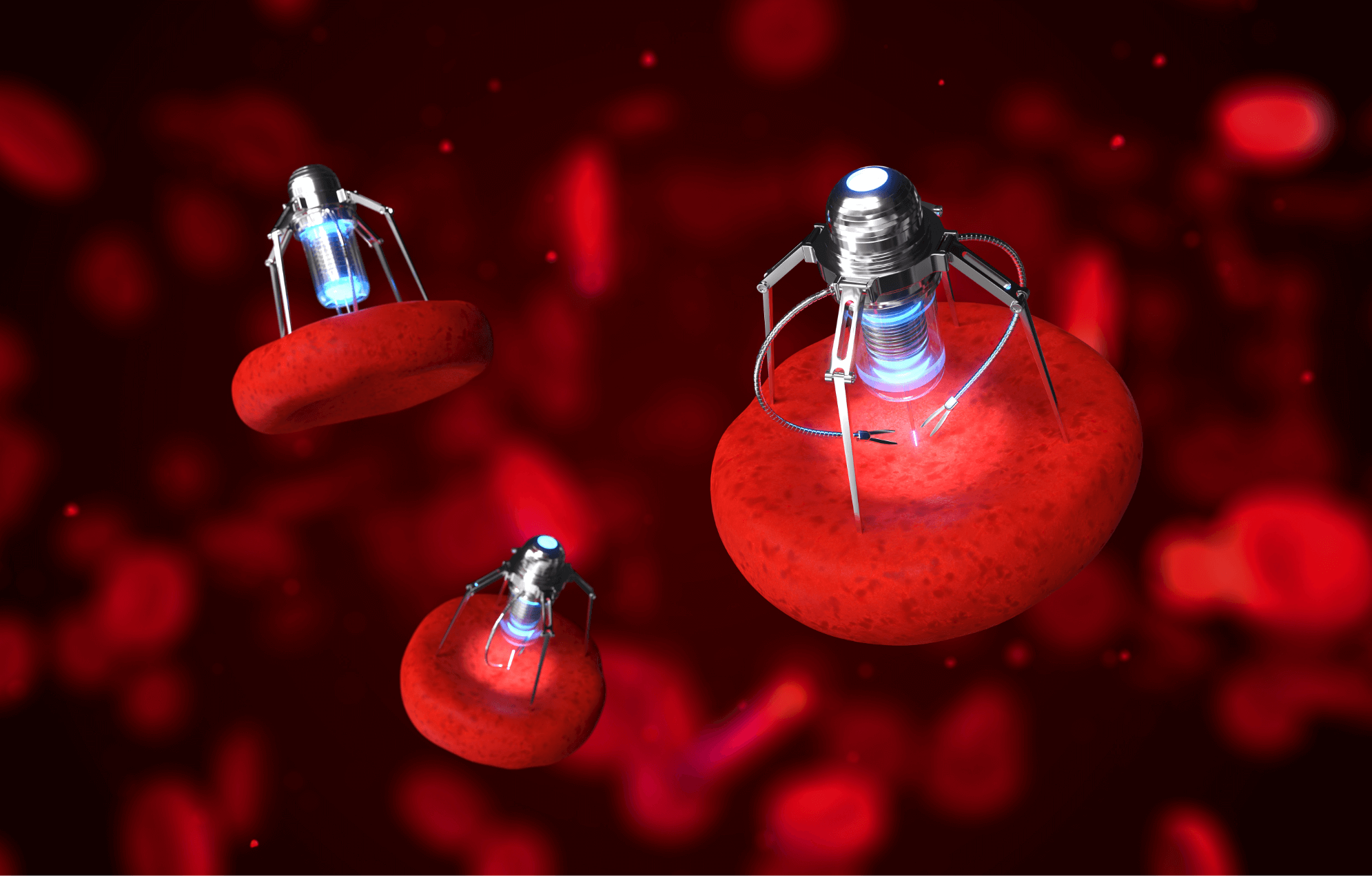
What if tiny machines and super-charged immune cells could team up to beat cancer in ways we once thought impossible? In recent years, a wave of innovation — from robot-assisted labs to smart immune cell therapies — is reshaping how we treat and understand serious diseases like cancer.
Today’s medical technology blends biology with engineering, creating pathways that empower the body’s own defenses and improve patient outcomes. Let’s explore this exciting frontier in a way that’s friendly, inspiring, and anchored in real science.
Musumeci Online – The Podcast. It is perfect for driving, commuting, or waiting in line!
Robot-Driven Labs: From Manual to Machine-Powered Discovery
In traditional cell therapy labs, scientists often perform delicate tasks by hand — moving cells from one container to another, monitoring growth, mixing solutions, and tracking reactions. Each step requires attention, precision, and time.
Now imagine replacing many of those steps with well-coordinated robotic arms that never tire.
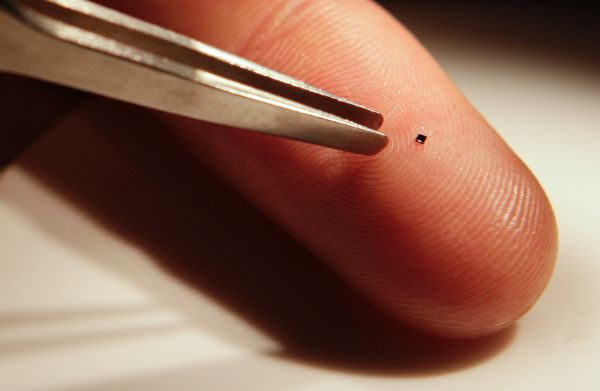
Robotics companies like Multiply Labs have developed robot-powered cell therapy manufacturing systems where machines replicate expert lab work setup by setup. The results are striking: robotic systems can reduce manufacturing costs by roughly 74%, drastically decrease contamination risk, and fit far more patient doses into the same space compared with manual methods.
Think of it like shifting from hand-crafting every individual cake in a bakery to using a smart machine that can bake hundreds at once, with greater precision and consistency. This makes life-saving therapies — historically priced at $300,000 to $2 million per dose — more affordable and widely accessible.
Smart Cells: The Immune System’s New Defenders
One of the most exciting areas in cancer medicine is cell-based immunotherapy, where doctors use a patient’s own immune cells to attack tumors.
A spotlight example is CAR T-cell therapy — a method where T cells (the immune system’s “soldiers”) are reprogrammed in the laboratory to identify and destroy cancer cells. This approach has already transformed outcomes for certain blood cancers. Recent world-first studies suggest that genetically modified CAR T therapies could help patients with solid tumors live up to 40% longer compared with traditional treatment alone — a major milestone, since solid tumors make up about 90% of all cancers.
As researchers refine these smart cells, they’re also finding new ways to control and guide them. For instance, teams in China have engineered tiny magnetic-acoustic CAR T cell microrobots that can navigate toward tumors, overcome obstacles in blood flow, and penetrate deep into tumor tissue — achieving more than six times greater accumulation near tumor sites in laboratory models.
You can imagine these enhanced cells as a fleet of tiny guided drones that not only fly toward a destination but also persistently attack enemy strongholds — in this case, stubborn cancer cells.
Closing the Gap: Solid Tumors and Next-Gen Designs
Historically, treatments that work against cancers in the blood (like leukemia) have been more successful than those tackling solid tumors (such as breast or pancreatic cancer). The difference? Solid tumors create a harsh, protective environment that makes them hard for immune cells to penetrate.
To overcome this, scientists are combining biology with physics and engineering:
- New CAR T designs can be activated or deactivated by external signals, like existing drugs in the body, for safety and precision.
- Ultrasound-controlled “EchoBack” CAR T cells remain active significantly longer — destroying tumors over days instead of hours — while requiring fewer hospital visits.
- Engineered molecular tweaks help T cells stay active in tougher environments and improve their tumor-killing power.
Imagine a team of firefighters who not only arrive faster but can also switch tools instantly and work longer on the toughest blazes — that’s the future vision for immune cell therapies.
Why This Matters for Everyone
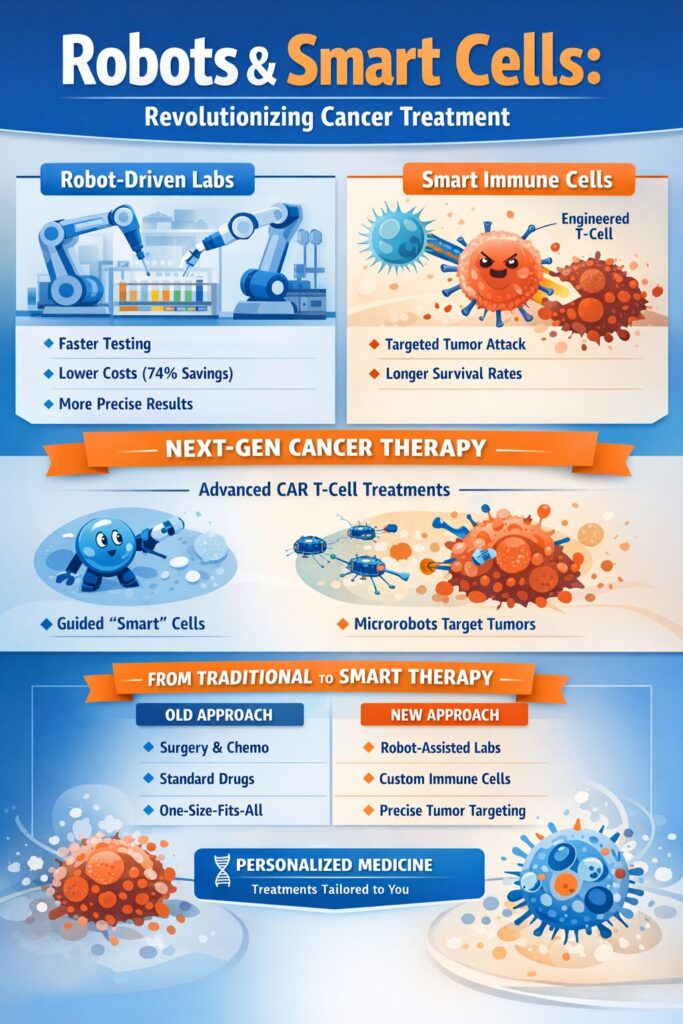
Cancer affects millions worldwide, but recent breakthroughs — especially those blending robotics, AI, and immune engineering — are giving doctors new, less invasive, more precise tools. Not only could these methods extend lives, but they also pave the way for personalized medicine where treatments match individual biology rather than a one-size-fits-all model.
Here’s a simple way to picture it:
| Traditional Treatment | Smart Therapy of Today |
|---|---|
| Surgery / chemo only | Robots assist in discovery and manufacturing |
| Standard drugs | Patient’s own cells become customized cancer fighters |
| Limited targeting | Guided smart cells attack tumors precisely |
| One-time approach | Long-lasting, controllable therapies |
The Hope Ahead
We are witnessing a transformation — one where machines and biology converge not to replace human wisdom but to amplify it. By enabling faster testing, smarter immune responses, and more cost-effective treatments, this new wave of technology gives hope to patients and families around the globe.
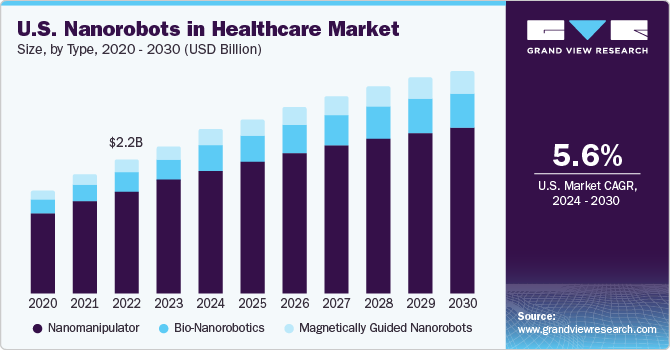
The global nanorobots in healthcare market size was estimated at USD 6.80 billion in 2023 and is projected to grow at a CAGR of 6.1% from 2024 to 2030.
As robotics and engineered cells continue to evolve, the horizon for cancer therapy broadens from “managing symptoms” to unlocking cures previously out of reach.
After all, when tiny machines, intelligent cells, and human ingenuity come together, medicine doesn’t just advance — it leaps forward.
Leave a Reply