Walking is something most people rarely think about. Yet behind every step lies a complex choreography between the brain, nerves, muscles, and joints. When that delicate system is disrupted by a spinal cord injury, stroke, or neurological disease, something as simple as standing up can become an enormous challenge.
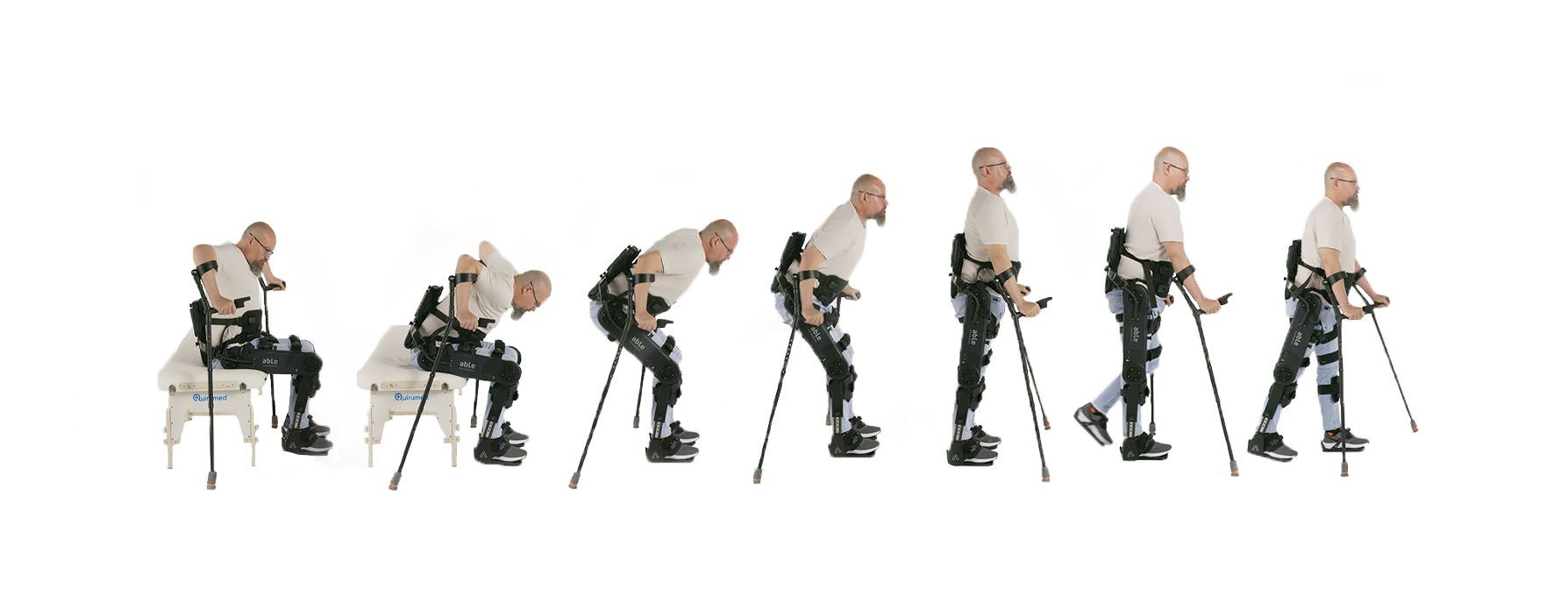
In recent years, however, a new generation of medical technologies has begun to change what recovery can look like. Among the most promising innovations is a robotic exoskeleton developed by the Spanish company Able Human Motion, a wearable device designed to help patients relearn how to walk during rehabilitation.
Presented to international audiences at major technology events such as the Mobile World Congress in Barcelona, this exoskeleton is not just another medical device. It represents a broader trend: the convergence of robotics, artificial intelligence, and data-driven medicine.
Musumeci Online – The Podcast. It is perfect for driving, commuting, or waiting in line!
When Robotics Meets Rehabilitation
An exoskeleton is essentially a wearable robotic structure that supports and guides the body’s movements. Think of it as an external framework that works alongside the human body, assisting muscles and joints during walking.
The system developed by Able Human Motion focuses specifically on neurological rehabilitation. It is designed for patients affected by conditions such as:
- Spinal cord injuries
- Stroke
- Multiple sclerosis
- Neurodegenerative diseases
- Rare neurological disorders
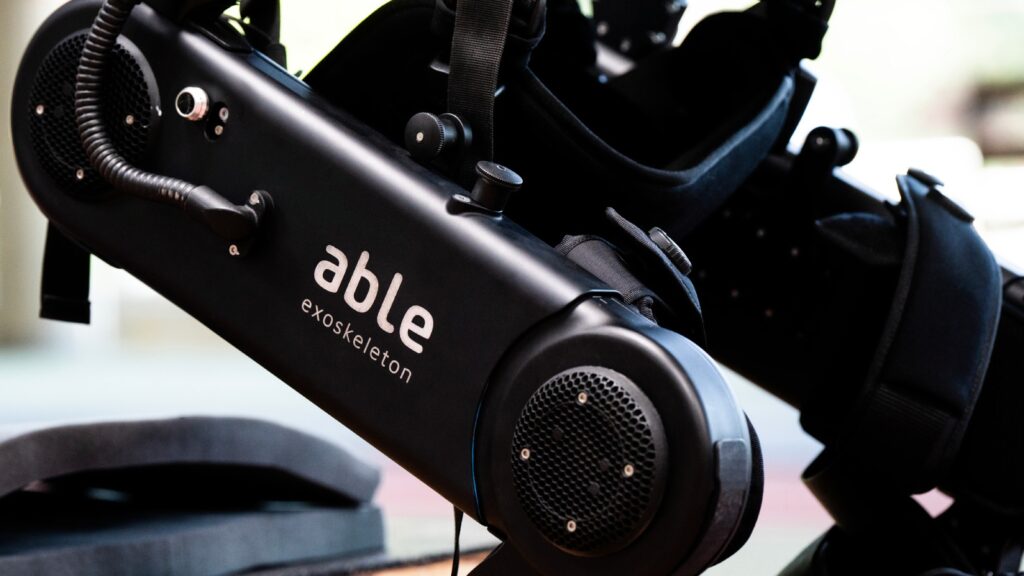
These conditions can disrupt communication between the brain and the muscles, making coordinated movement extremely difficult. The robotic exoskeleton helps compensate for that lost connection by guiding the legs through natural walking patterns.
For many patients, the first experience of standing and walking again—even with robotic assistance—can be deeply emotional.
Lighter, Simpler, and More Accessible
One of the challenges with earlier exoskeleton technologies has been practicality. Many systems were heavy, complex to operate, and expensive.
The device created by Able Human Motion addresses these limitations by focusing on simplicity and accessibility. Compared with several competing solutions, the system is lighter and easier to put on, which makes it more suitable for everyday clinical use.
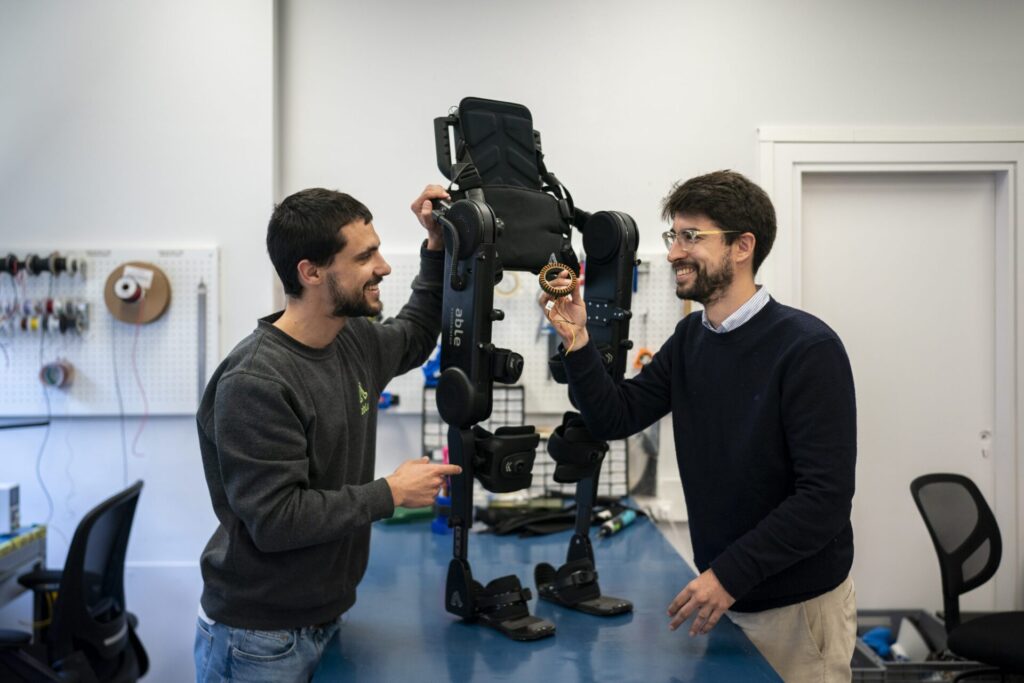
Cost also matters. If an advanced technology is too expensive, it may never reach the patients who need it most. By reducing the price significantly compared with similar devices, the company aims to make robotic rehabilitation available to more hospitals and healthcare systems.
The impact of that approach is already visible. In its first year of clinical use, the technology has been introduced in several hospitals in Catalonia, where hundreds of patients have incorporated the exoskeleton into their rehabilitation programs.
Turning Movement Into Data
Perhaps the most fascinating aspect of this exoskeleton is not just that it helps patients walk—it also collects valuable biomedical data during every step.
While a patient moves, the device records information such as:
- Number of steps taken
- Distance walked
- Walking speed and cadence
- Time spent standing
- Balance and gait symmetry
Imagine a smartwatch that tracks your daily steps. Now imagine a much more advanced version designed for medical therapy. Instead of simply counting steps, the system analyzes the quality of each movement.
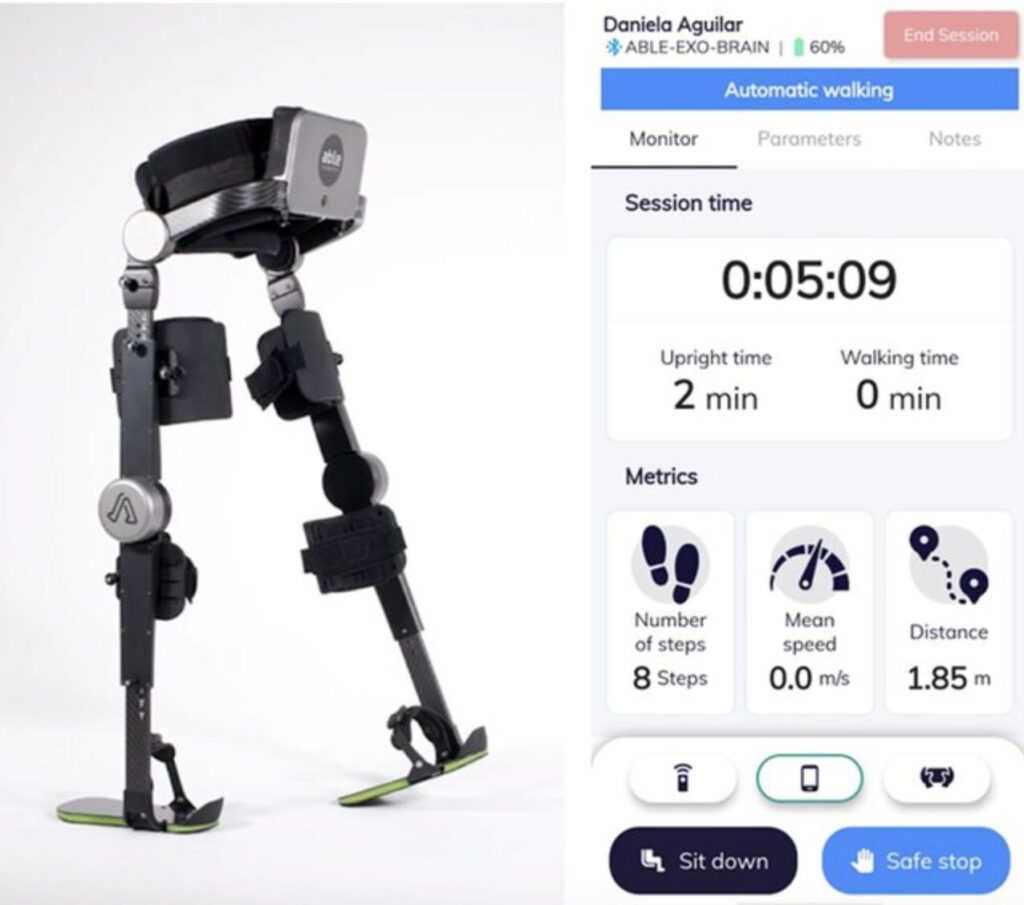
For example, if a patient’s right step is significantly shorter than the left one—a common issue after neurological injuries—the exoskeleton can detect this imbalance. Therapists can then adjust the robotic assistance to gradually restore a more natural walking pattern.
This transformation of movement into measurable data allows doctors and physiotherapists to track progress with a level of precision that was previously difficult to achieve.
A Personalized Approach to Rehabilitation
Rehabilitation has traditionally relied heavily on observation and experience. Therapists watch how patients move and adjust exercises accordingly.
While this expertise remains essential, modern technologies are adding a new dimension: objective measurement.
The exoskeleton generates detailed reports after each therapy session. These reports allow clinicians to compare multiple sessions over time, identifying improvements in endurance, balance, and mobility.
Think of it as similar to the way athletes use performance analytics to improve their training. Just as a runner analyzes speed and distance, therapists can now analyze walking patterns and recovery progress.
This data-driven approach makes it easier to tailor rehabilitation programs to each patient’s needs.
Motivation: An Invisible but Powerful Medicine
Recovery from neurological injury is rarely quick. Progress can be slow, sometimes measured in small improvements over weeks or months.
Motivation plays a crucial role in this process. When patients can see and feel progress—even small steps forward—it can dramatically influence their willingness to continue therapy.
Exoskeleton-assisted walking offers a powerful psychological benefit. Being able to stand upright and move again often boosts confidence and emotional well-being.
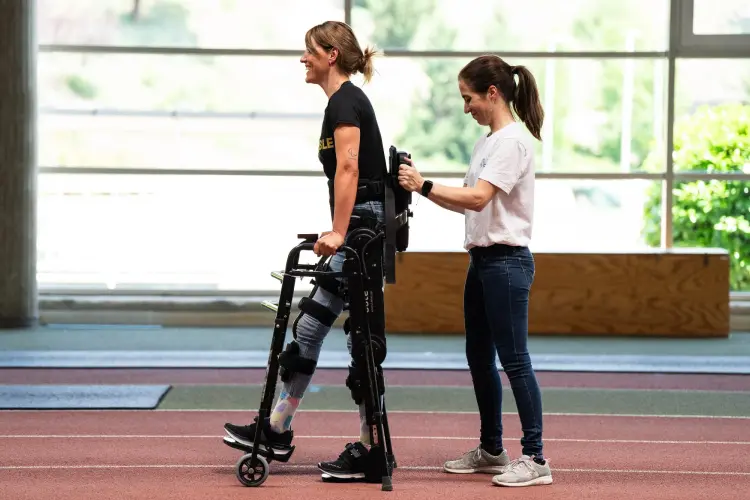
Studies involving patients with conditions such as multiple sclerosis and Guillain-Barré syndrome have shown encouraging results. Many participants experienced improvements in walking endurance, balance, and perceived safety when using robotic-assisted rehabilitation.
In other words, technology is not only supporting the body—it is also strengthening the patient’s determination to recover.
Helping Therapists as Well
The benefits of robotic rehabilitation extend beyond patients. Physiotherapists often face significant physical strain when assisting patients during walking exercises.
Traditionally, therapists may need to support the patient’s weight while guiding their steps. Over time, this can lead to fatigue or even injury among healthcare professionals.
Exoskeletons reduce that burden by providing mechanical support during movement. This allows therapists to focus more on clinical analysis and therapy planning instead of physically lifting or stabilizing patients.
In practical terms, it improves working conditions while enabling more efficient rehabilitation sessions.
Part of a Larger Technological Revolution
The exoskeleton from Able Human Motion is part of a broader transformation happening in healthcare.
Around the world, technologies such as robotic surgery, artificial intelligence diagnostics, digital twins of the human body, and brain-computer interfaces are redefining how medicine approaches treatment and recovery.
At the same technology conference where this exoskeleton was showcased, researchers also presented experimental medical nanorobots capable of targeting tumors with remarkable precision. These developments highlight how rapidly innovation is expanding the boundaries of medicine.
Rehabilitation robotics fits perfectly within this new ecosystem, where data, AI, and advanced hardware work together to enhance human health.
Looking Ahead: The Future of Walking Assistance
Today, robotic exoskeletons are mainly used in clinical environments under professional supervision. But many researchers believe the technology could eventually evolve further.
Future versions may become lighter, smarter, and more autonomous. Combined with artificial intelligence and wearable sensors, they might adapt automatically to a patient’s needs.
Some experts even imagine rehabilitation systems where exoskeletons, AI-driven movement analysis, and virtual reality therapy are integrated into a single platform.
Such systems could provide immersive rehabilitation environments where patients train their muscles and nervous system simultaneously.
Technology That Restores Possibility
Every technological revolution begins with a simple idea: using innovation to solve human problems.
In the case of rehabilitation robotics, the goal is deeply human—helping people regain mobility, independence, and dignity after life-changing injuries.
The exoskeleton developed by Able Human Motion represents a powerful example of how engineering, data science, and medicine can work together toward that goal.
For patients who once believed walking again might be impossible, even a few assisted steps can represent a profound transformation.
And sometimes, the future of healthcare begins with something as simple—and as extraordinary—as taking the next step.
Leave a Reply