For many years, the idea of a “high-tech prosthetic foot” has been closely linked to complexity.
We imagine motors, batteries, sensors, and artificial intelligence constantly adjusting every movement in real time. In this vision, progress means adding more technology.
But SoftFoot Pro, developed in Italy and tested in competitive environments like CYBATHLON, challenges this assumption in a very subtle but powerful way.
Instead of adding more electronic components, it removes them.
And surprisingly, it still manages to walk, adapt, and behave in a way that resembles the human foot more closely than many motorized systems.
Musumeci Online – The Podcast. It is perfect for driving, commuting, or waiting in line!
The hidden problem of traditional prosthetic feet
To understand why SoftFoot Pro matters, we need to look at a simple but often overlooked problem: walking is not a flat, repetitive motion.
Every step we take changes depending on the surface:
- Soft sand absorbs energy differently than concrete
- Grass deforms under pressure
- Stairs require controlled ankle rotation
- Uneven terrain constantly shifts the center of balance
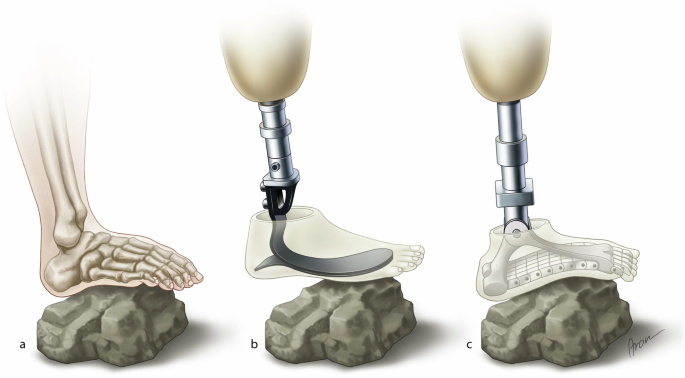
Human feet solve this effortlessly because they are not rigid structures. They are complex mechanical systems made of bones, ligaments, tendons, and muscles that continuously adapt.
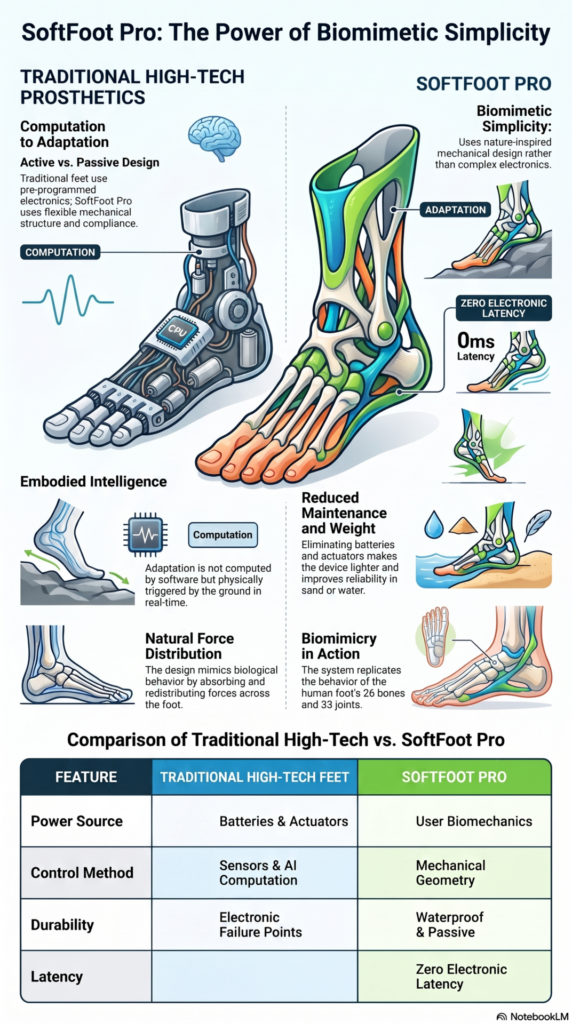
Most conventional prosthetic feet, however, are still relatively rigid or only partially adaptive. Even advanced powered devices often rely on:
- Electronic control systems
- Battery-powered actuation
- Pre-programmed response patterns
This creates a gap between biological motion and artificial motion. The result is that users often need to compensate consciously for what a biological foot would do automatically.
The surprising engineering idea behind SoftFoot Pro
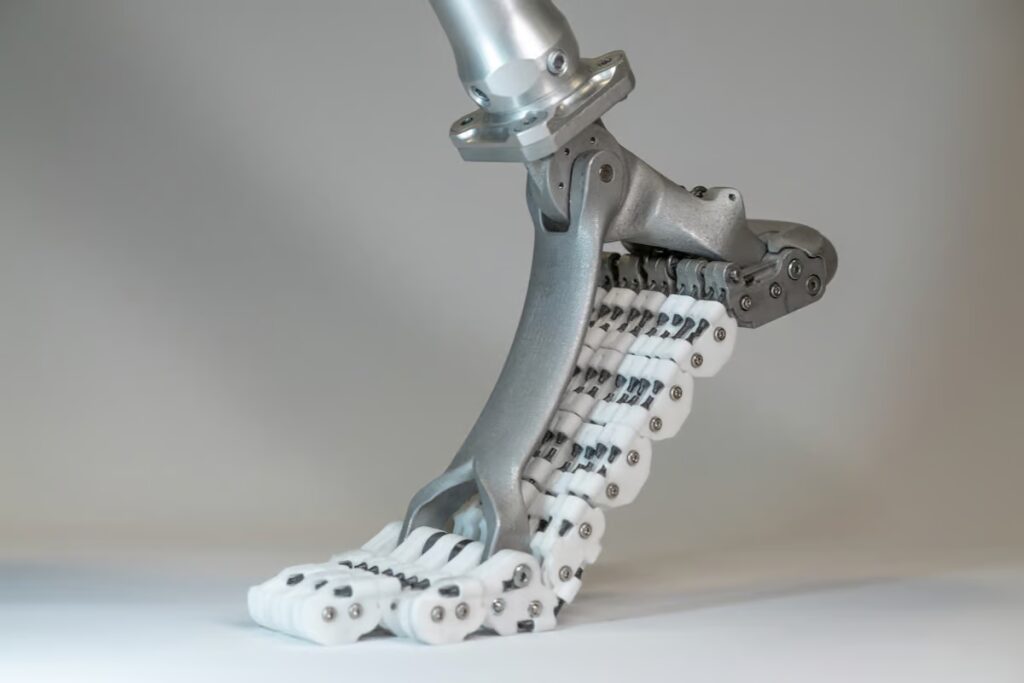
SoftFoot Pro introduces a radically different philosophy: what if the best prosthetic foot is not the one that “controls” movement, but the one that naturally allows it?
It is a passive, motorless, flexible, and waterproof artificial foot.
Instead of using motors to adapt to terrain, it uses mechanical design inspired directly by the structure and behavior of the human foot.
This approach is rooted in a field known as biomimicry—the practice of learning from nature’s evolutionary solutions.
Nature has had millions of years to optimize how living organisms move efficiently across complex environments. Rather than competing with that evolution, SoftFoot Pro tries to translate it into engineering.
Biomimicry in action: how nature becomes engineering
The key idea behind SoftFoot Pro is deceptively simple:
If the human foot adapts to terrain through structure, not electronics, then a prosthetic foot can do the same.
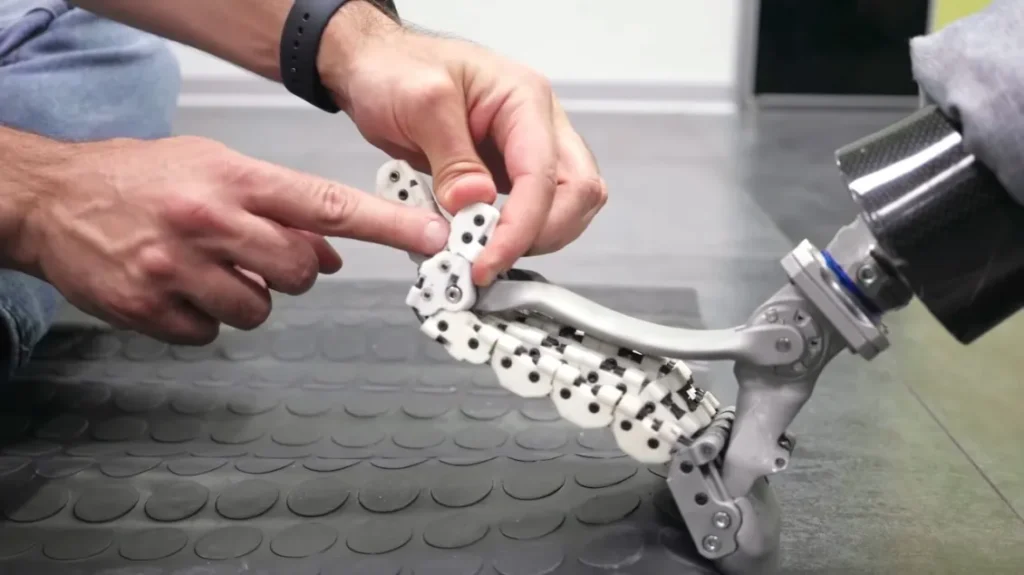
Instead of replicating muscles or adding artificial intelligence, the design focuses on:
- Flexible structural elements
- Mechanical compliance (the ability to deform under load and return energy)
- Passive adaptation to uneven surfaces
- Natural distribution of forces across the foot
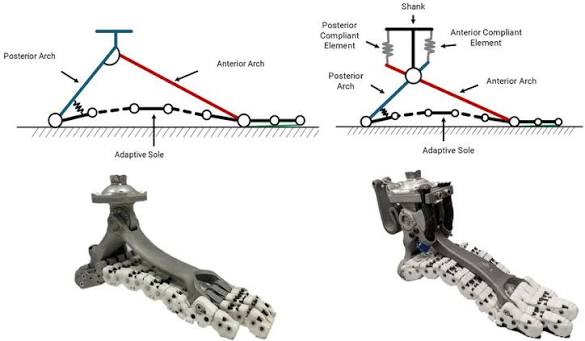
This means that when the user steps on an irregular surface, the foot itself absorbs and redistributes forces in a way that mimics biological behavior.
No software updates. No battery management. No electronic latency.
Just physics and geometry doing the work.
Why a motorless prosthetic foot can be a breakthrough
At first glance, removing motors might sound like a step backwards. In reality, it solves several important clinical and engineering challenges.
1. Reduced weight
Electronic prosthetics require batteries and actuators. SoftFoot Pro eliminates these components, making the device lighter and potentially less fatiguing for the user.
2. Lower maintenance complexity
Fewer electronic parts mean fewer failure points. This can improve reliability in everyday environments such as sand, water, or dust.
3. Energy efficiency
Because it is passive, the system does not depend on external energy sources. The movement is driven by the user’s own biomechanics and mechanical energy return.
4. Natural terrain adaptation
Instead of “calculating” adjustments, the structure physically responds to the ground in real time.
This is a key conceptual shift: adaptation is not computed, it is embodied.
Why the human foot is still unmatched in engineering terms
To appreciate this innovation, it helps to remember what we are trying to replicate.
The human foot contains:
- 26 bones
- 33 joints
- More than 100 muscles, tendons, and ligaments
But its true genius is not in any single component. It is in how everything works together as a dynamic, adaptive structure.
When we walk, the foot is simultaneously:
- A shock absorber
- A lever for propulsion
- A balance system
- A sensory interface with the ground
This level of multifunctionality is extremely difficult to replicate with rigid mechanical systems.
SoftFoot Pro does not attempt to copy every detail. Instead, it focuses on reproducing the behavior of the system through mechanical design.
CYBATHLON: where engineering meets real life
One of the most interesting aspects of SoftFoot Pro is its participation in competitions like CYBATHLON, where assistive technologies are tested in real-world-like tasks.

Unlike laboratory conditions, CYBATHLON challenges prosthetic systems with:
- Uneven terrain
- Obstacle navigation
- Real movement constraints
These environments are essential because they reveal how technology performs outside controlled settings.
For prosthetic users, the real question is not how advanced a device looks in theory, but how it behaves when life becomes unpredictable.
A shift in mindset: from control to adaptation
SoftFoot Pro represents a broader trend in biomedical engineering.
For a long time, the goal was to increase control over biological systems. More sensors, more computation, more precision.
But an emerging philosophy is taking shape:
Instead of controlling biology, we design systems that cooperate with it.
This shift moves innovation from electronics to structure, from computation to mechanics, and from control to adaptation.
In this sense, SoftFoot Pro is not just a prosthetic foot. It is a statement about how future medical devices might be designed.
What this means for the future of prosthetics
The implications of this approach go beyond a single device.
We may be entering a phase where prosthetics are defined by:
- Bio-inspired mechanical intelligence
- Hybrid systems that combine passive and active elements
- Reduced reliance on batteries and electronics
- Greater integration with natural human movement patterns
In some cases, the most advanced solution might not be the most technologically complex one, but the one that best understands how biology already solved the problem.
Final reflection
SoftFoot Pro invites us to rethink what innovation means in medicine.
Instead of asking “How can we add more technology?”, it asks a more fundamental question:
How can we design technology that behaves like nature without needing to outsmart it?
In that sense, this Italian bio-inspired prosthetic foot is not just an engineering achievement.
It is a reminder that sometimes, the most powerful technologies are the ones that quietly disappear into the natural logic of the human body.
Leave a Reply