
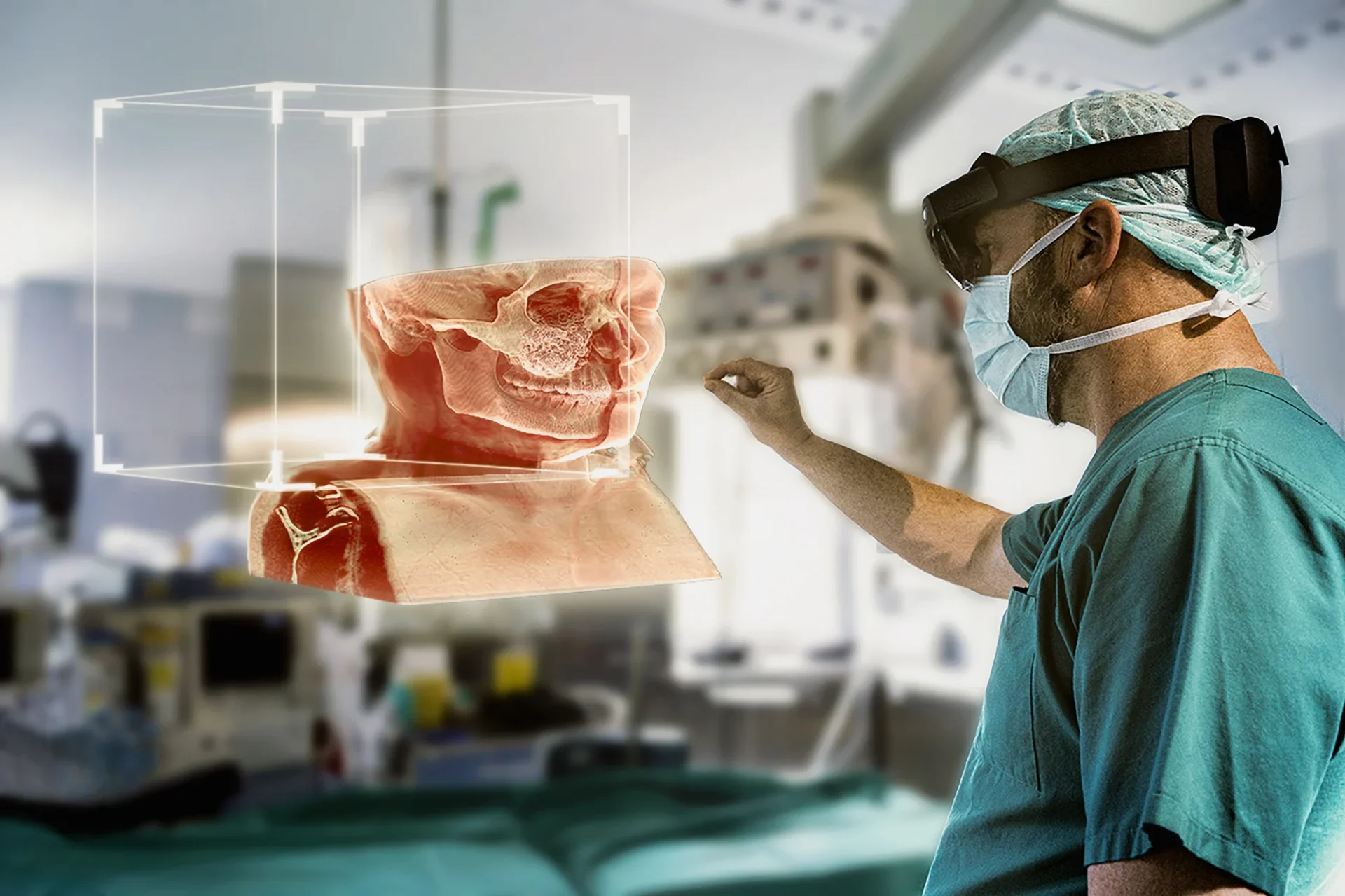
A new wave of medical innovation is quietly reshaping how doctors see the human body—and it looks almost like science fiction. Instead of relying only on flat images on a screen, some physicians can now explore organs, tumors, and blood vessels as three-dimensional holograms floating in front of them.
At the center of this transformation is ApoQlar, a German health-tech company that is redefining how medical data is visualized and understood.
Musumeci Online – The Podcast. It is perfect for driving, commuting, or waiting in line!
From Flat Screens to Living 3D Models
Traditionally, doctors have used scans like MRIs or CT images to understand what is happening inside the body. These images are incredibly detailed, but they are still two-dimensional—like trying to understand a complex building by looking at its blueprints.
ApoQlar changes this experience completely.
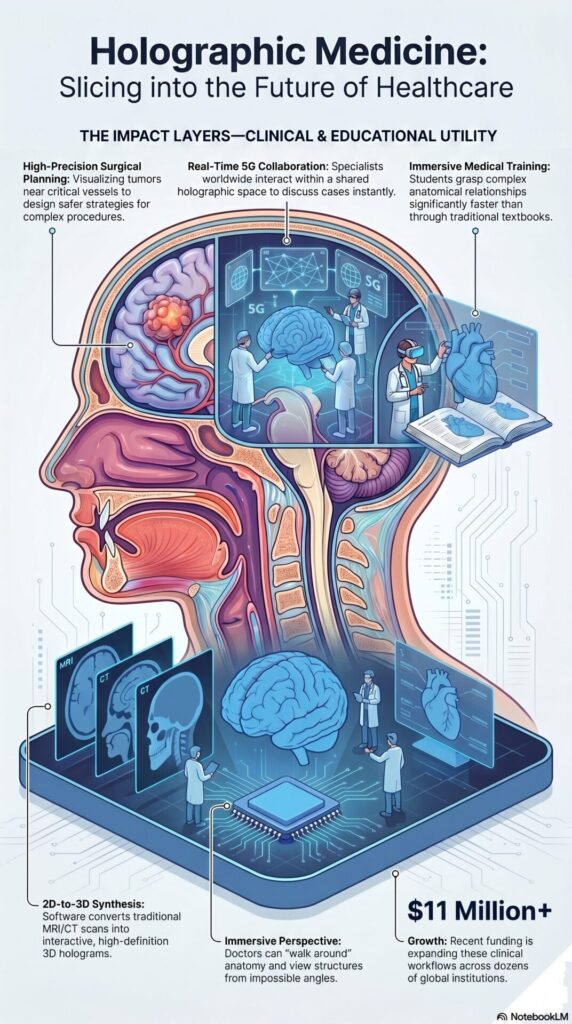
Its flagship software turns those same scans into interactive 3D holograms. With the help of mixed reality headsets, doctors can “walk around” a patient’s anatomy, zoom in on specific areas, and even view structures from angles that would be impossible on a normal screen.
Think of it like switching from a paper map to a fully immersive GPS system—you don’t just see the route, you experience it.
Why This Matters: Better Decisions, Safer Surgeries
One of the most powerful applications of holographic medicine is surgical planning.
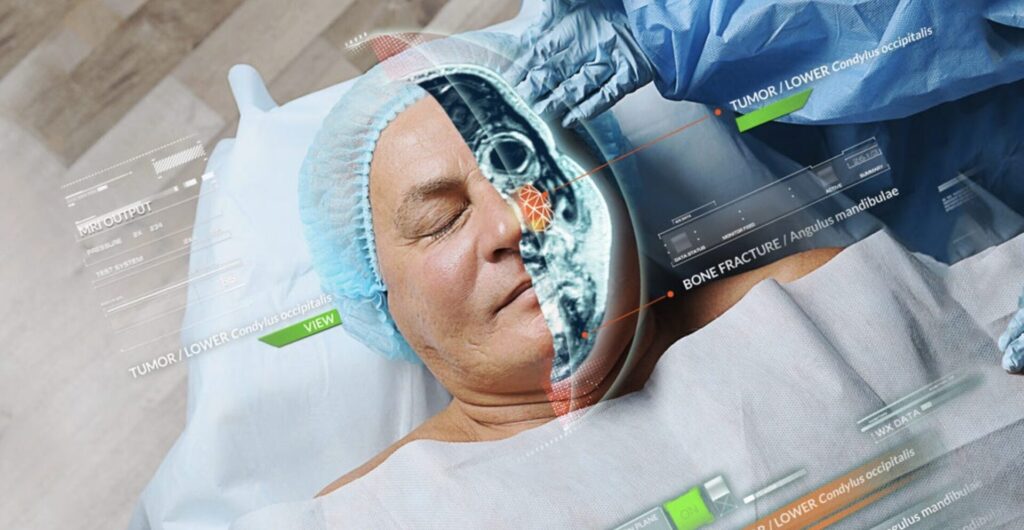
In complex cases—such as tumors located near critical blood vessels—decisions can be extremely challenging. A small miscalculation can have serious consequences. By visualizing the patient’s anatomy as a 3D hologram, surgeons gain a deeper understanding of the situation before making any incisions.
There are already real-world examples where procedures once considered too risky became possible thanks to this technology. After reviewing a patient’s condition in holographic form, doctors have been able to design safer surgical strategies and improve outcomes.
To put it simply: seeing more clearly leads to acting more confidently.
A Global Collaboration Tool
Another fascinating aspect of ApoQlar’s technology is its ability to connect medical professionals across the world.
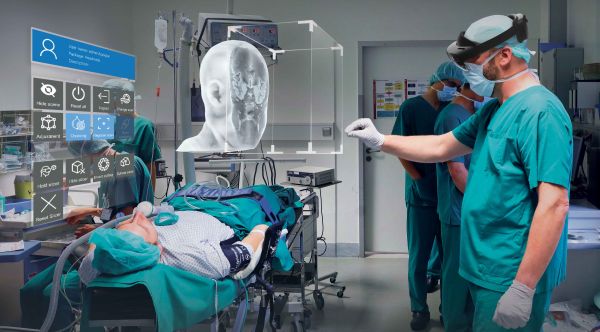
Imagine a surgeon in Singapore discussing a case in real time with a specialist in Europe—both looking at the same holographic model, manipulating it, and sharing insights instantly. This is not a future concept; it is already happening.
With the support of high-speed networks like 5G, these holograms can be streamed and interacted with almost without delay. It’s similar to a video call—but instead of talking over slides, doctors collaborate inside a shared 3D space.
Training the Next Generation of Doctors
Medical education is also undergoing a quiet revolution.
Learning anatomy from textbooks can be like trying to understand a sculpture by reading a description. Holographic models, on the other hand, allow students to explore the human body in a hands-on, visual way.
They can observe how organs relate to each other, simulate procedures, and even join live surgeries remotely. This kind of immersive learning helps future doctors build confidence and intuition much faster.
Some institutions using this technology report that students grasp complex anatomical relationships significantly quicker—like the difference between reading about riding a bike and actually getting on one.
The Role of Artificial Intelligence
ApoQlar doesn’t stop at visualization. Artificial intelligence is integrated into its platform to enhance how data is interpreted.
AI can help highlight critical areas, suggest possible diagnoses, or identify patterns that might be difficult to detect with the human eye alone. It acts like a smart assistant, supporting doctors without replacing their expertise.
If we compare it to everyday life, it’s similar to how navigation apps suggest the fastest route while you remain in control of the journey.
Recent Momentum and Industry Growth
Interest in holographic medicine is accelerating rapidly.
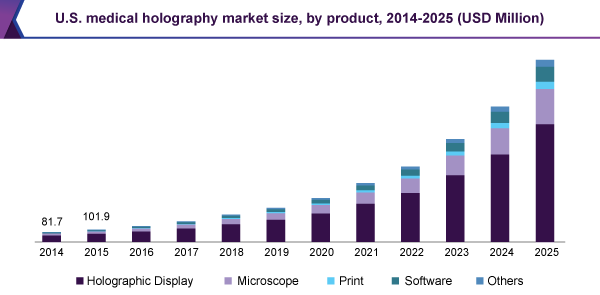
ApoQlar recently secured significant investment—over $11 million in funding—to expand its technology and collaborate with more hospitals worldwide. Today, its solutions are used across dozens of medical institutions and multiple specialties, from neurosurgery to oncology.
What started as an experimental idea is quickly becoming part of real clinical workflows.
At the same time, global initiatives and research projects are exploring how these tools can support remote diagnostics and even virtual patient interactions using 3D avatars.
Beyond the Hospital: A Glimpse Into the Future
The implications of holographic medicine go far beyond surgery rooms.
In the near future, patients themselves could better understand their conditions by seeing their own anatomy in 3D. Complex diagnoses could be explained visually rather than verbally, making healthcare more transparent and human.
There is also potential for combining this technology with robotics, brain-computer interfaces, and advanced neurotechnology—opening doors to treatments that today seem almost unimaginable.
A Technology That Feels Human
What makes ApoQlar’s innovation truly compelling is not just its technical sophistication, but its human impact.
At its core, this technology helps doctors see more clearly, collaborate more effectively, and make better decisions. And when that happens, patients benefit.
If the history of medicine has been about improving what we can do, holographic medicine is about improving how we understand.
And sometimes, understanding is the most powerful tool of all.
Leave a Reply